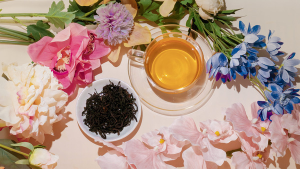

Meditative Tea Ceremony Steps refer to a structured sequence of actions where the physical brewing process is synchronized with mental awareness. Unlike casual drinking, each step—from cleansing the teaware to the final sip—serves as a specific sensory anchor. This practice combines the principles of “Ichigo Ichie” (cherishing the moment) with somatic grounding, allowing the practitioner to enter a state of flow and deep relaxation through intentional movement.
Introduction: Turning a Routine into a Ritual
We spend our days consuming—swallowing coffee on the way to work, gulping down water during a meeting. We move through life in a hurry, our actions becoming rote habits performed without thought or presence. But what if we could reclaim one of these simple, daily acts and transform it into a moment of profound peace?
This is the difference between a habit and a ritual. A habit is something you do automatically. A ritual is something you do with intention. The purpose of a tea ceremony is not to perform a complex, rigid set of religious rules. It is to provide a universal, psychology-based framework for turning the simple act of brewing tea into a powerful 20-minute practice that can reset your mind, calm your body, and anchor you firmly in the present moment.
Preparation: The “Mise-en-place” of the Mind
Before the ceremony begins, we prepare our space—both external and internal.
- The Physical Space: You don’t need an elaborate setup. A clean, uncluttered tray with your teaware is enough. Embrace the Japanese concept of Ma (間), or negative space. Resist the urge to fill every corner of your tea table. This empty space is not a void; it is a silence that allows your mind room to breathe.
- The Mental Space: Before you touch a single piece of teaware, sit comfortably. Close your eyes. Take three slow, deep breaths, and with each exhale, let go of the day that has passed and the day that is yet to come.
- Tea Selection (Expert Recommendation): For a multi-infusion meditative practice, an Oolong or Puerh tea is ideal. Their complex character unfolds over many steepings, providing layers of flavor to explore. Furthermore, they are best brewed with very hot, near-boiling water, and the potent energy of the heat is a powerful tool for grounding and sensory awareness.
The 7 Meditative Tea Ceremony Steps
Approach each step not as a task to be completed, but as an experience to be inhabited. Each physical action is paired with a specific mental focus.
Step 1: Purification (Warming the Vessel)
- The Physical Action: Gently pour boiling water into your empty teapot or gaiwan, filling it. Then, pour that water into your fairness pitcher, and from the pitcher into each of your tasting cups. Finally, discard all the water.
- The Meditative Focus: “Cleansing.” As you pour, visualize the hot water not just warming the ceramic, but washing away the dust of the day—both literal and metaphorical. Feel the steam rise. This is a ritual cleansing of your tools and your mind. With the discarding of the water, tell yourself: “The past is gone. I am here, now.”
Step 2: The Awakening (Introducing the Leaf)
- The Physical Action: Place your dry tea leaves into the now warm, empty teapot. Put the lid on, gently shake the pot once or twice, and then lift the lid to your nose.
- The Meditative Focus: “Greeting.” This is your first true meeting with the tea. Inhale its dry aroma. This is the scent of a season, the essence of the sun and soil captured in a dried leaf. Practice micro-awareness. Notice the subtle details. Is the aroma sweet, woody, floral? This is a quiet, intimate greeting with a gift from nature.
Step 3: The Alchemy (The Pour)
- The Physical Action: Lift your kettle. Pour the hot water over the leaves in a steady, focused stream.
- The Meditative Focus: “Sound & Breath.” This is where you begin to sync your body with the ritual. Try this powerful technique: as you lift the kettle, take a slow, deep inhale. As you begin to pour the water, begin a long, slow exhale, matching the duration of your breath to the duration of the pour. This breath syncing is a gateway to a state of flow, calming your nervous system and focusing your mind with beautiful precision.
Step 4: The Stillness (The Steep)
- The Physical Action: Place the lid on your teapot. Now, you wait. For a Gongfu-style brew, this may only be 10-30 seconds.
- The Meditative Focus: “Patience.” This is often the most challenging step in our hyper-stimulated world. Resist the powerful urge to check your phone, to tidy your space, to do something. Your task is to do nothing. Simply sit, with your hands resting in your lap, and watch the teapot. This intentional, active stillness is the very heart of the ceremony.
Step 5: The Offering (The Serve)
- The Physical Action: Pour the brewed tea from your teapot into the fairness pitcher, and from the pitcher, fill each small tasting cup.
- The Meditative Focus: “Service.” Even when you are practicing alone, perform this act with grace and care. As you pick up your cup, hold it with both hands as if you were offering it to a cherished guest. This gesture of offering the tea to yourself is a profound, non-verbal act of self-compassion and respect.
Step 6: The Union (The Sip)
- The Physical Action: Bring the cup to your lips. Drink the tea in three distinct sips.
- The First Sip: A small sip to moisten your lips and palate. Notice only the temperature.
- The Second Sip: A larger sip. Gently slurp to draw in air, allowing the aroma to fill your entire sinus cavity (retro-nasal olfaction). Notice the flavor and texture.
- The Third Sip: Drain the cup. Swallow and follow the sensation of warmth as it travels down into your body.
- The Meditative Focus: “Internalization.” In this moment, the external world (the tea, a product of nature) has become a part of your internal world. Acknowledge this simple, profound union.
Step 7: The Completion (The Clean Up)
- The Physical Action: After your final infusion, clear the wet leaves from your pot. Wash and dry each piece of teaware with deliberate, careful movements. Return each item to its proper place.
- The Meditative Focus: “Gratitude.” The ceremony does not end when the tea is gone; it ends when the space is restored. This act of “closing the circle” provides a deep sense of completion and gratitude. It honors the tea, the tools, and the time you dedicated to yourself.
The Philosophy Behind the Steps: Ichigo Ichie
Underpinning this entire ceremony is a core concept from Japanese tea philosophy: Ichigo Ichie (一期一会), which translates to “one time, one meeting.”
It is a reminder that this specific moment in your life will never happen again. Even if you use the same tea, the same water, and the same pot tomorrow, you will be a different person. The air will be different, the light will be different. The experience is unrepeatable. Embracing the spirit of Ichigo Ichie transforms the tea ceremony from a mere set of steps into a practice of cherishing the precious, fleeting nature of the present moment, which is the ultimate goal of any meditation.
Troubleshooting Your Practice
- Problem: “My mind wanders during the steep.”
- Solution: That’s okay. The mind’s job is to wander. Your job is to gently guide it back. Use the rising steam from the teapot’s spout as a visual anchor. Watch its patterns as it dances in the air.
- Problem: “I feel rushed and clumsy.”
- Solution: Slow down your movements to an almost exaggerated degree. Pour the water as if it were honey. Place the cup down as if it were made of impossibly thin glass. When your body moves slowly, your mind will follow.
Conclusion: The Tea Ceremony of Life
These seven steps are more than just a way to brew tea. They are a template for how to approach any task with intention, presence, and grace. They teach us how to create moments of sacred order in the midst of a chaotic world. The skills you cultivate on the tea table—patience, focus, gentle awareness—are the very skills you need to navigate the beautiful, fleeting ceremony of life.
The next time you brew a cup of tea, you don’t have to do all seven steps. Just try one. Try incorporating Step 3, “The Alchemy,” and sync your breath to your pour. See what changes.
FAQ
- Q: How long should a tea meditation take?
A: A session with 3-5 infusions of tea will typically take about 15-20 minutes, which is an ideal duration for beginners to maintain focus without feeling overwhelmed. - Q: Do I need a full Gongfu tea set to practice this?
A: While a proper set is highly recommended for the full tactile and sensory experience, you can absolutely adapt these principles to a simple mug ritual. Use a beautiful mug, a small dish for your tea bag, and perform each action—pouring the water, holding the warm mug, sipping—with the same level of intention. - Q: Can I play music during the ceremony?
A: Yes, but choose wisely. Opt for purely instrumental or ambient music with no lyrics. Lyrics can activate the language centers of the brain, creating an internal monologue that can be distracting. The goal is to quiet the inner chatter, not add to it.