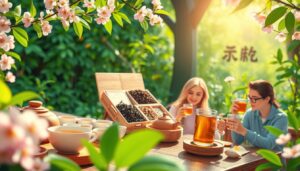

Mindful Tea Drinking is not merely consuming a beverage, but a structured meditation practice that utilizes the multisensory experience of tea brewing and drinking to anchor attention in the present moment. It combines the neurochemical benefits of L-theanine, which promotes relaxation, with psychological grounding techniques to reduce anxiety and enhance mental clarity.
Introduction: Finding Sanctuary in a Teacup
In the constant digital hum of modern life, our minds are often fragmented, pulled in a dozen directions by the demands of multitasking. This state of perpetual distraction leads to a deep sense of mental exhaustion, where focus becomes a scarce commodity and anxiety a low-grade, constant companion. We seek refuge, a moment of stillness, but often find it elusive. What if the sanctuary you’re searching for could be found in the simple act of preparing a cup of tea?
This is the promise of Mindful Tea Drinking, a practice that reframes tea as a form of “liquid meditation.” It’s an accessible, profound tool for reclaiming your attention. In this guide, we will move beyond mystique and delve into the practical synergy of neuroscience and professional tea science. I will teach you how to leverage the time it takes to brew a single cup of tea to calm your nervous system and reshape your brain’s capacity for focus.
The Science Behind the Practice: Why Tea Works Better Than Coffee
The calming yet clarifying effect of a tea session is not a placebo. It’s a sophisticated biochemical ballet taking place in your brain, a dance that coffee, for all its power, cannot replicate.
The Neurochemistry of Calm: L-theanine and Alpha Waves
The key to tea’s unique effect is an amino acid called L-theanine, found almost exclusively in the Camellia sinensis plant. After you take a sip, L-theanine crosses the blood-brain barrier and goes to work, stimulating the production of Alpha brain waves. Neuroscientists identify Alpha waves as the signature of “relaxed alertness”—the same serene, focused state achieved by experienced meditation practitioners.
This is where tea’s genius lies. While it contains caffeine that provides stimulation, the L-theanine simultaneously provides a calming, focusing effect. This synergy is in stark contrast to coffee, which often triggers a “fight or flight” response by spiking cortisol and adrenaline. Tea, on the other hand, gives you focus without the frenzy, alertness without the anxiety. It creates the perfect neurochemical environment for a mindful state.
Sensory Grounding & Neuroplasticity
From a psychological perspective, mindful tea drinking is a powerful “sensory grounding technique.” Anxiety often stems from the brain’s Default Mode Network, a circuit responsible for mind-wandering, rumination, and worrying about the past or future. The structured, multisensory experience of a tea ritual—the sight of the leaves, the sound of the water, the evolving aroma—forces your brain to disengage from this anxious loop. By directing your full attention to the tangible sensations of the present moment, you are actively calming your nervous system and, with consistent practice, strengthening the neural pathways for focus and presence.
Preparing the Vessel: Environment and Selection
The tools you choose are not incidental; they are integral to the practice. The right tea and the right setup create the foundation for a profound session.
Selecting the Right Tea for Mindfulness
For this practice, we avoid generic recommendations and select teas based on their aromatic path and body feel (Cha Qi), as these qualities directly influence the meditative experience.
- High Mountain Oolong: This is for a session focused on mental uplift and clarity. The vibrant, floral, and ethereal aromas of a High Mountain Oolong are primarily experienced through the nose (orthonasal olfaction). This makes it an excellent tool for practices centered on breathwork and focusing the mind through scent.
- Aged Puerh: This is for a session aimed at deep grounding and calming anxiety. The rich, earthy, and forest-floor notes of Aged Puerh have a “sinking” quality that helps quiet a racing mind. Its profound body feel, or Cha Qi, encourages interoception—the practice of looking inward and sensing the body’s internal state.
Creating the Ritual Space (The Setup)
The environment you create is a signal to your brain that it’s time to shift gears.
- Practice the Single-Task Principle: This is a moment of digital detox. Put your phone on silent and out of sight. Close the laptop. The goal is to eliminate distractions and dedicate this small window of time entirely to the tea.
- Choose Your Tools Wisely: While any cup will do in a pinch, using simple Gongfu teaware—like a small teapot or a lidded bowl called a gaiwan—is highly recommended over a large mug. The seemingly “fussy” steps of a Gongfu ritual (warming the pot, rinsing the leaves, pouring into small cups) are not a barrier; they are the very anchors of the practice, providing a structured sequence of actions for your mind to focus on.
The 5-Step Mindful Tea Drinking Guide
This is the core of the practice. Move through these steps slowly, with deliberate attention. Each step is an opportunity to anchor yourself in the present.
Step 1: Visual Engagement (The Dry Leaf)
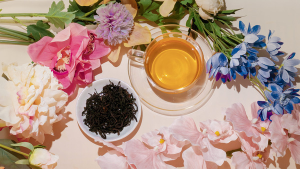
Before any water is poured, spend a moment with the dry leaves. Place them in a tea holder or the dry, warmed pot. Observe their shape, their color, the texture. Are they tightly rolled spheres or long, twisted strips? Do they have fine, silvery hairs? Contemplate the journey of this leaf—the soil, the sun, the rain of its terroir that shaped its appearance. This is a moment of connection, seeing the vastness of nature in the palm of your hand.
Step 2: Auditory Focus (The Sound of Water)
As you pour hot water over the leaves, listen. This is a powerful auditory anchor. Notice the sound as the water first hits the leaves and the vessel. Pay attention to the subtle change in pitch as the pot fills, shifting from a higher, sharper sound to a lower, fuller one. For these few seconds, let the sound of the water be the only thing in your universe.
Step 3: Olfactory Awakening (The Aroma)
Scent is the most direct path to our brain’s emotional and memory centers. A tea meditation offers three distinct aromatic stages to explore.
- Dry Aroma: After warming your empty pot, add the dry leaves, cover, and gently shake. Lift the lid and inhale. This is the tea’s most essential, baked-in fragrance.
- Lid Aroma: After the first brief infusion, lift the lid of your gaiwan or pot and bring it to your nose. This is where the most volatile, high-note aromatics are captured—the bright florals, the zesty citrus.
- Cup Bottom Aroma: After you’ve finished drinking the tea, take a moment to smell the empty, cooled cup. This is where the heavier, more persistent base notes linger—notes of honey, wood, or sweet spice.
Step 4: Gustatory Immersion (The Taste & Texture)
Bring the cup to your lips. Instead of just drinking, use the “slurping” technique: draw a small amount of tea into your mouth along with a bit of air. This aerates the liquid, spraying it across your entire palate and allowing you to perceive its full spectrum of flavor and texture. Don’t just judge it as “good” or “bad.” Investigate the sensations:
- Bitterness: A fleeting, stimulating sensation on the back of the tongue.
- Astringency: A pleasant, drying, and structural feeling on the sides of your cheeks.
- Hui Gan (Returning Sweetness): The magical, lingering sweetness that emerges in the throat after the initial bitterness fades.
This experience is a powerful metaphor. By consciously embracing the initial bitterness, you are rewarded with a deeper, more lasting sweetness—a lesson from the leaf on patience and perspective.
Step 5: Somatic Awareness (The Body Feel / Cha Qi)
After you swallow, close your eyes. This is a moment of pure interoception. Track the sensation of the warm liquid as it moves down your throat and into your stomach. Can you feel a gentle warmth spreading from your core outwards? This sensation is what tea masters call Cha Qi, or the life force of the tea. Scan your body. Notice if any areas of tension—your shoulders, your jaw—have softened or “melted” with the warmth. This final step integrates the mind and body, completing the circuit of the meditation.
Integrating “Micro-Tea-Moments” into Busy Days
You don’t need a full 30-minute ceremony to benefit from this practice. You can integrate “micro-doses” of mindfulness into even the busiest of schedules.
Try the “3-Breath Tea Method” with your next cup:
- Breath 1: As you lift the mug, take a slow, deep breath in, inhaling the steam and aroma.
- Breath 2: Take a sip. Hold the tea in your mouth for a moment, noticing its taste and texture.
- Breath 3: Swallow the tea, and as you exhale, consciously release any tension in your shoulders and jaw.
For these moments, consider a brisk black tea in the morning to awaken the senses, and a soothing aged white tea in the evening to gently wind down.
Conclusion: The Tea Ceremony of Self
Ultimately, mindful tea drinking is not about becoming a tea expert. It’s about using tea as an expertly designed tool to become an expert on yourself. The practice is a form of self-care, a non-pharmaceutical intervention for a scattered mind. It teaches us that sanctuary is not a place we must travel to, but a state of being we can cultivate, one intentional cup at a time.
Next time you boil water, don’t walk away. Stay with the sound. Try this practice for just one cup. Share in the comments: which aroma note did you discover when you finally slowed down?
FAQ
- Q: Can I practice mindful tea drinking with tea bags?
A: Yes, you absolutely can. While loose-leaf tea, especially in a Gongfu setup, offers a more complex sensory experience (observing the leaves unfurl, distinct aromatic stages), the core principles of mindfulness apply to any cup. Focus on the warmth of the mug, the color of the liquor, the aroma, and the taste. The intention is more important than the equipment. - Q: What is the best time for tea meditation?
A: The ideal time is whenever you can create a small, uninterrupted window for yourself. The early morning, before the day’s demands begin, can be a powerful time to set a calm and focused tone. Alternatively, a session in the mid-afternoon can serve as a valuable “reset” to combat mental fatigue. Experiment and find what best suits your personal rhythm. - Q: Does tea really help with anxiety?
A: While tea is not a medical treatment for anxiety disorders, its biochemical properties can support the body’s ability to find calm. The key component is L-theanine, an amino acid that promotes Alpha brain waves, which are associated with a state of relaxed alertness. This, combined with the psychological grounding effect of the warm, sensory ritual, can be a powerful tool for managing everyday stress and anxious feelings.