
TL;DR — The One-Minute Answer
Phoenix Oolong (Fenghuang Dancong, 凤凰单枞) and Tieguanyin (铁观音, Iron Goddess of Mercy) are both celebrated Chinese oolongs, but they come from different provinces, have different oxidation levels, and taste entirely different. Tieguanyin — from Anxi, Fujian — is a balled, lightly oxidized oolong (10–30%) prized for a smooth, creamy floral character ideal for beginners. Phoenix Dancong — from Fenghuang Mountain, Guangdong — is a strip-style, moderately oxidized oolong (30–60%) celebrated for its bold, single-bush aromatic intensity across ten official fragrance types, including Mi Lan Xiang (Honey Orchid). Choose Tieguanyin for gentle, approachable florals. Choose Phoenix Dancong if you want a complex, perfume-like aromatic experience that evolves dramatically across 8–10 steepings. Azenbor specializes exclusively in Phoenix Dancong, sourced directly from Wudong Mountain.
Introduction: Two Legends, One Category
Phoenix Oolong and Tieguanyin are the two most internationally recognized Chinese oolongs — yet they share almost nothing beyond their broad category. Understanding the differences between them is the most important decision a new oolong explorer will make, because choosing the wrong one for your palate can lead to a disappointing first experience with a genuinely extraordinary category of tea.
The global oolong tea market reached USD 320.72 million in 2024 and is projected to grow at a CAGR of 3.85% through 2033 (Straits Research, 2025). Within China, Tieguanyin is the dominant commercial force: a 2024 study published in ScienceDirect confirms that Anxi Tieguanyin accounts for over 40% of total oolong tea production in China, and its brand value reached an estimated 143.2 billion yuan in 2023 — placing it first among more than 800 Chinese tea brands. Phoenix Dancong occupies a smaller but rapidly growing premium niche, celebrated by connoisseurs worldwide for its single-bush cultivation philosophy and extraordinary aromatic complexity.
This guide provides a head-to-head comparison across every dimension that matters: origin, cultivation, oxidation, flavor profile, brewing method, health profile, and who each tea is best suited for. Azenbor’s Phoenix Dancong teas are used as the primary reference for Phoenix oolong throughout.
Origins and Geography: Why Location Defines Everything
Phoenix Oolong and Tieguanyin come from different Chinese provinces — a geographic separation of roughly 600 kilometers — and this distance accounts for virtually all of their differences in flavor, style, and cultivation philosophy.
Tieguanyin: Anxi County, Fujian Province
Tieguanyin originates from Anxi County in southern Fujian Province, where the tea has been produced since at least the Qing Dynasty (1644–1912). According to In Pursuit of Tea, Tieguanyin has long been considered one of China’s ten famous tribute teas, historically given as a gift to grease the wheels of government and industry. The Anxi growing region sits at elevations of 600–1,000 meters, with an average annual temperature of 15–18°C and deep, acidic red soils particularly well-suited to the Tieguanyin cultivar. The plant itself — a small-leaf Camellia sinensis — was later transplanted to Taiwan, where it became the foundation of that island’s thriving oolong industry.
The name “Tieguanyin” (鐵觀音) translates as “Iron Goddess of Mercy” or “Iron Buddha.” The “iron” reference speaks to the laboriousness of the processing method, which involves repeated cycles of bruising, rolling, and shaping. According to the Wan Ling Tea House’s production documentation, the tossing process alone is conducted in three to four phases, with each round requiring a resting period of 2 to 12 hours — making Tieguanyin one of the most labor-intensive oolongs to produce.
Phoenix Dancong: Fenghuang Mountain, Guangdong Province
Phoenix Dancong (凤凰单枞) is produced exclusively on Fenghuang (Phoenix) Mountain in Chaozhou, Guangdong Province — a remote mountain range described by Red Blossom Tea Company as the only place where these unique oolong teas are grown and crafted. The highest-elevation growing zone, Wudong Mountain, sits at 1,000–1,500 meters above sea level, with rocky, mineral-rich soils and persistent mountain fog that slows leaf development and concentrates aromatic compounds.
The word “Dancong” (单枞) means “single bush” — these oolongs are traditionally harvested from individual trees, with each batch processed separately to preserve the character of that specific tree. Red Blossom Tea Company notes that premium Phoenix oolong leaves are not plucked until the tree is at least 60 years old, and the oldest cultivated trees in the Wudong area exceed 600 years of age. This makes Phoenix Dancong fundamentally different from Tieguanyin in its production philosophy: while Tieguanyin is typically a blended, cultivar-level tea, authentic Phoenix Dancong expresses the individual character of specific trees.
Processing and Oxidation: The Technical Differences
The most significant technical distinction between Tieguanyin and Phoenix Dancong is their oxidation level and leaf shape — two factors that directly determine everything about the finished tea’s flavor.
Tieguanyin: Lightly Oxidized, Tightly Rolled
Modern Tieguanyin — which dominates the market today — is processed to a relatively low oxidation level of 10–30%, according to Orientaleaf’s comprehensive oolong processing guide. The processing style known as Qing Xiang (清香, “light fragrance”) uses air conditioning during oxidation to limit enzymatic reactions, producing a bright, green-tinged liquor with fresh floral and vegetal notes. A parallel traditional style, Nong Xiang (浓香), uses heavier oxidation and charcoal roasting to achieve a richer, nuttier profile — but modern market preferences have pushed Qing Xiang to commercial dominance.
After fixation, Tieguanyin undergoes a distinctive shaping process: leaves are wrapped in cloth and machine-rolled into tight pellets or balls. According to the Hugo Tea Company’s production documentation, this step creates a compressed “crinkle shape” that locks in delicate aromatic oils, releasing them slowly during brewing as the balls gradually unfurl. Siamteas’ tea education series notes that this ball shape means a small amount of Tieguanyin leaves expands dramatically when steeped — a common beginner mistake is using too much leaf.
Phoenix Dancong: Moderately Oxidized, Strip-Style
Phoenix Dancong is processed to a moderate oxidation level of 30–60%, according to iTeaworld’s oolong oxidation level guide. The Zuo Qing (bruising) step for Dancong is more vigorous and longer than for Tieguanyin, producing more pronounced edge-reddening on the leaves — a visual marker of authentic Phoenix processing. The key differentiating step is multiple charcoal roasting rounds, a characteristic feature of Guangdong oolong production noted by Siam Tea. Each roasting round develops aromatic depth and locks in the tea’s signature “Xiang” (aroma type) while mellowing astringency.
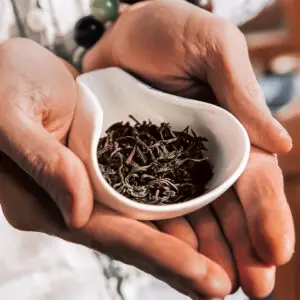
Unlike Tieguanyin’s ball shape, Phoenix Dancong leaves are formed into long, twisted strips that remain open after drying. This strip shape allows aromatics to volatilize rapidly upon contact with boiling water — producing the immediate, intense fragrance burst that first-time Phoenix Dancong drinkers invariably notice. The strip shape also means Phoenix Dancong leaves visually reveal their quality: look for a dark, uniform twist with consistent color.
| Processing Factor | Tieguanyin | Phoenix Dancong |
| Oxidation Level | 10–30% (modern Qing Xiang style) | 30–60% (moderate; Nong Xiang style) |
| Leaf Shape | Tightly ball-rolled pellets | Long twisted strips |
| Roasting | Light or no roast (Qing Xiang); heavier for Nong Xiang | Multiple charcoal roasting rounds |
| Harvest Standard | 1 bud + 2–3 leaves; machine-blended batches | Leaves from individual trees; single-tree batches |
| Processing Difficulty | Very high (30+ hours of rolling cycles) | Very high (multi-day withering + repeat roasts) |
Flavor Profile: What Do They Actually Taste Like?
This is where Tieguanyin and Phoenix Dancong diverge most dramatically — and where personal preference becomes the deciding factor.
Tieguanyin: Creamy, Orchid, Smooth
High-quality Tieguanyin produces a pale yellow to light golden liquor with a distinctly silky mouthfeel. The dominant flavor notes are floral orchid, with secondary characteristics of cream, osmanthus, and a mild sweetness that builds across steepings. According to Verdant Tea’s buyer’s guide, no matter how Tieguanyin is finished, the tea will show orchid-like floral notes in the aftertaste, a creamy undertone, and a lingering building sweetness. The modern Qing Xiang style emphasizes freshness and green-vegetal notes alongside the florals; the traditional Nong Xiang style adds warmth, roasted sweetness, and hazelnut-caramel depth.
Tieguanyin’s flavor arc is subtle and builds slowly. Verdant Tea notes that the aromatics can take at least three steepings to fully emerge, and the tightly rolled leaves may resist fully unfurling for five or six steepings — making patience a key part of the Tieguanyin experience. The tea is rarely sharp or astringent in quality examples, and the texture is notably smooth — described by In Pursuit of Tea as producing “a silky flavor and buttery texture with a resonating floral aroma.”
Phoenix Dancong: Bold, Aromatic, Multi-Layered
Phoenix Dancong delivers an immediately intense aromatic experience that is unlike any other oolong. The fragrance is front-and-center from the first pour: bold floral or fruity aromas that vary by variety — from the honey-orchid sweetness of Mi Lan Xiang to the ginger spice of Jiang Hua Xiang, the fruity brightness of Ya Shi Xiang, and the jasmine delicacy of Mo Li Xiang. According to Wikipedia’s oolong entry, Dancong teas are specifically noted for their ability to naturally imitate the flavors and fragrances of various flowers and fruits without any added flavoring — a distinction shared by no other oolong category.
The flavor evolves dramatically across steepings in a way Tieguanyin does not match. White2Tea’s oolong spectrum guide describes Phoenix Dancong’s bold, intense aromas as what sets them apart from all other teas, with each infusion moving through distinct aromatic phases. Iiteaworld’s flavor profile research confirms that moderately oxidized oolong teas (25–50% oxidation, which includes Phoenix Dancong) produce more complex combinations of floral, honey, and fruit aromatics than lightly oxidized styles. A hallmark characteristic unique to Phoenix Mountain teas is “Shan Yun” (山韵, mountain rhyme) — a mineral-sweet lingering quality in the aftertaste that connoisseurs consider the mark of genuine Wudong-origin tea.
Side-by-Side Flavor Comparison
| Flavor Dimension | Tieguanyin | Phoenix Dancong (e.g. Mi Lan Xiang) |
| Aroma Intensity | Gentle, subtle, builds slowly | Immediate and intense; perfume-like |
| Primary Notes | Orchid, cream, osmanthus, light sweetness | Honey, orchid, lychee, tropical fruit, mineral |
| Liquor Color | Pale yellow to light golden | Golden amber to deep amber |
| Mouthfeel | Silky, smooth, buttery | Full-bodied, clean, lingering sweetness |
| Aftertaste | Building orchid sweetness (“Yin Yun”) | Mineral-sweet “Shan Yun” (Mountain Rhyme) |
| Flavor Complexity | Moderate; orchid-dominant throughout | High; dramatically different notes per steep |
How to Brew Each Tea: Key Differences
The two teas require meaningfully different brewing approaches — primarily because of their leaf shapes and flavor profiles.
Brewing Tieguanyin
Tieguanyin’s tightly rolled balls require careful attention to two things: water temperature and leaf quantity. The modern Qing Xiang style is best brewed at 85–95°C (185–203°F) — boiling water will damage the delicate aromatics. According to Tea J Tea’s brewing guide, water below boiling (approximately 85–96°C) is recommended for Tieguanyin. Use 5–7g of leaf per 100ml in a gaiwan or small teapot, discarding the first rinse to allow the balls to open. Expect 4–6 high-quality steepings from a Qing Xiang style, or 5–8 from a traditional Nong Xiang style. White2Tea cautions that a small amount of tightly rolled Tieguanyin will open up to reveal a lot of leaf — and that accidentally filling a thermos is a common beginner mistake.
Brewing Phoenix Dancong
Phoenix Dancong uses boiling water (100°C / 212°F) and shorter infusion times than most Western tea drinkers expect. For the Gongfu method, use 7–8g per 110ml gaiwan, beginning with a 5-second rinse and then short steepings of 10–20 seconds, increasing by 15–30 seconds with each subsequent steep. A premium Wudong-origin Phoenix Dancong yields 8–10 steepings, with each infusion revealing different aromatic layers. White2Tea’s oolong guide notes that Dancongs are notorious for being tricky to steep perfectly, but using less leaf and a slightly lower temperature (95°C) can help if the intensity is overwhelming. The most distinctive Phoenix Dancong brewing experience is the “Gua Xiang” technique: smell the empty, still-warm aroma cup or gaiwan lid after pouring — the lingering bottom-of-cup fragrance can persist for 30 minutes in a quality tea.
Brewing Comparison at a Glance
| Parameter | Tieguanyin | Phoenix Dancong |
| Water Temp | 85–95°C / 185–203°F | 95–100°C / 203–212°F (full boil) |
| Leaf Quantity | 5–7g per 100ml | 7–8g per 110ml |
| First Steep | 30–60 sec (rinse to open leaves) | 5 sec rinse, then 10–15 sec |
| Number of Steepings | 4–6 (Qing Xiang) / 5–8 (Nong Xiang) | 8–10 (premium Wudong-origin) |
| Best Vessel | Gaiwan or glass teapot (preserves color) | Gaiwan + aroma cup (captures fragrance) |
| Beginner Difficulty | ★★★☆☆ Moderate — leaf expansion tricky | ★★★★☆ More demanding — timing critical |
Health Benefits: How Do They Compare?
Both Tieguanyin and Phoenix Dancong share the general health properties of the oolong tea category, but their different oxidation levels produce different polyphenol profiles — which translate to some meaningful differences in their functional profiles.
Polyphenols and Antioxidant Activity
Oolong tea’s antioxidant activity comes primarily from catechins (more abundant in lighter-oxidized teas) and theaflavins (more abundant in more heavily oxidized teas). Because Tieguanyin is more lightly oxidized, it retains more green-tea-like catechins, particularly EGCG. Phoenix Dancong’s higher oxidation level converts more catechins into theaflavins and thearubigins — complex polyphenols associated with cardiovascular health benefits. A 2024 peer-reviewed study in ScienceDirect (seasonal variation of Tieguanyin metabolomics) identified triterpene saponins as a novel class of health-relevant compounds in Anxi Tieguanyin that vary significantly between spring and autumn harvests. The study covered 266 Tieguanyin products, making it the largest metabolomics study of the variety to date.
L-Theanine and Caffeine
Both teas contain L-theanine — the amino acid that promotes calm focus without the jitteriness of caffeine alone. High-altitude, old-tree Phoenix Dancong from Wudong Mountain tends to accumulate higher L-theanine concentrations because slow-growth conditions (dense fog, diffuse light) favor amino acid synthesis over catechin production. In terms of caffeine, both teas are moderate — typically 30–50mg per serving for Phoenix Dancong brewed Gongfu style. Tieguanyin brewed Western-style produces a slightly higher caffeine content per serving due to longer infusion times, but both remain well below the 80–100mg typical of a cup of coffee.
Which Has More Health Benefits?
Neither tea is definitively superior in health terms — they have complementary profiles. Lightly oxidized Tieguanyin is closer in composition to green tea and may offer higher EGCG content per gram. Moderately oxidized Phoenix Dancong provides a broader range of complex polyphenols from its multi-step oxidation and charcoal roasting, including unique roasting-derived compounds. Both teas provide L-theanine, minerals from high-altitude growing, and the documented digestive benefits of oolong tea. The healthiest choice is the one you enjoy drinking regularly — consistent consumption matters more than marginal compositional differences.
Which Tea Is Right for You? A Decision Framework
The right choice depends on your flavor preferences, experience level, and what you want from a tea session.
Choose Tieguanyin If You…
- Are new to oolong and want an approachable, non-overwhelming entry point
- Enjoy green tea and want to explore something more complex without a dramatic shift
- Prefer a smooth, creamy, subtle floral character over bold aromatics
- Want a tea that is forgiving to brew — less timing-sensitive than Phoenix Dancong
- Like a gentle, building flavor that reveals itself slowly across multiple steepings
- Are looking for a caffeine-moderate afternoon tea with a calming quality
Choose Phoenix Dancong If You…
- Want the most aromatic tea experience available in the oolong category
- Are curious about single-origin, single-bush cultivation and terroir expression
- Enjoy discovering how a tea changes dramatically from steep to steep
- Are interested in exploring different fragrance types (ten official varieties)
- Are ready to invest in the Gongfu brewing experience for maximum complexity
- Want to give an exceptional, memorable gift to a tea-curious person
- Already enjoy Tieguanyin and are ready for something with more depth and intensity
Consider Starting with a Sampler
If you are genuinely undecided, the most efficient path is to taste both side by side. Azenbor’s Phoenix Dancong 10 Fragrance Sampler provides access to the full spectrum of Phoenix oolong aromatic styles — including Mi Lan Xiang (Honey Orchid), the most approachable and popular variety, which shares some of the floral gentleness of Tieguanyin while offering the distinctive Dancong intensity. Tasting Mi Lan Xiang alongside a Qing Xiang Tieguanyin is the clearest way to understand exactly where your preferences lie on the oolong flavor spectrum.
Conclusion: Two Different Philosophies of Oolong
Tieguanyin and Phoenix Dancong represent two fundamentally different philosophies of oolong tea. Tieguanyin is a cultivar-level tradition: a carefully crafted, blended tea from Anxi that prioritizes consistency, accessibility, and the smooth, orchid-cream elegance that made it one of China’s most celebrated teas for centuries. Phoenix Dancong is a single-bush philosophy: an artisanal, terroir-driven tea from Fenghuang Mountain where each tree’s unique identity is the point — ten official fragrance types, each expressing a different natural aromatic character that evolves in complexity across 8–10 steepings.
According to ScienceDirect’s 2024 Tieguanyin metabolomics study, Anxi Tieguanyin holds the highest brand value among over 800 Chinese tea brands — reflecting its deep commercial and cultural roots. But Phoenix Dancong occupies a different kind of prestige: the global premium specialty tea segment is growing at a CAGR of 20.2% (Straits Research, 2025), driven by consumers seeking exactly what Phoenix Dancong offers — single-origin authenticity, documented terroir, and a drinking experience that is impossible to replicate from a tea bag or a blended batch.
Ready to experience Phoenix Dancong? Azenbor’s Mi Lan Xiang (Honey Orchid) is the ideal starting point — and the 10 Fragrance Sampler is the best way to discover the full aromatic world of Phoenix Mountain oolong tea.
Frequently Asked Questions
Q1: What is the main difference between Phoenix Oolong and Tieguanyin?
Phoenix Oolong (Fenghuang Dancong) comes from Guangdong Province and is a strip-style, moderately oxidized (30–60%) oolong known for its bold, perfume-like aromatic intensity across ten fragrance types. Tieguanyin comes from Fujian Province and is a ball-rolled, lightly oxidized (10–30%) oolong prized for its smooth, creamy orchid character. The two teas share the same category (oolong) but differ in origin, cultivation philosophy, oxidation level, leaf shape, brewing method, and flavor profile.
Q2: Which is better for beginners — Phoenix Oolong or Tieguanyin?
Tieguanyin is generally considered more beginner-friendly because its flavor is gentler, its ball shape makes leaf quantity management straightforward, and it does not require precision timing during brewing. Phoenix Dancong, while extraordinary, has a bolder aromatic intensity and requires more precise Gongfu brewing to avoid over-steeping. That said, Azenbor’s Mi Lan Xiang (Honey Orchid) — the most popular Phoenix Dancong variety — is an excellent accessible starting point for anyone curious about Dancong oolong.
Q3: Can you brew Phoenix Oolong and Tieguanyin the same way?
No — they require different brewing parameters. Tieguanyin is best brewed at 85–95°C (185–203°F) with longer infusion times (30–60 seconds for the first steep) to avoid damaging delicate aromatics. Phoenix Dancong uses boiling water (100°C) and very short steepings (10–15 seconds initially in Gongfu style). Using boiling water with Tieguanyin can produce a harsh, bitter cup. Using cooler water with Phoenix Dancong will suppress its aromatic compounds and produce a flat, underwhelming result.
Q4: Which oolong has more caffeine — Phoenix Dancong or Tieguanyin?
Both teas contain moderate caffeine — approximately 30–50mg per Gongfu-style serving, compared to 80–100mg in a typical cup of coffee. When brewed Western-style, Tieguanyin may yield slightly more caffeine per serving due to longer infusion times, but the difference is minimal. High-altitude, old-tree Phoenix Dancong from Wudong Mountain tends to have favorable caffeine-to-L-theanine ratios, promoting calm alertness without jitteriness. Neither tea is considered high-caffeine.
Q5: Is Phoenix Oolong more expensive than Tieguanyin?
Premium Wudong-origin Phoenix Dancong is typically more expensive than comparable-quality Tieguanyin for two reasons: the single-bush cultivation philosophy (individual tree batches) produces far smaller quantities than cultivar-blended Tieguanyin, and the multi-day processing involving repeated charcoal roasting requires more artisan time. Entry-level Phoenix Dancong is comparable in price to mid-range Tieguanyin, but Lao Cong (old-tree) Phoenix Dancong from Wudong commands significant premium pricing due to extreme rarity.
Q6: Which oolong is better for health — Phoenix Dancong or Tieguanyin?
Both teas provide meaningful health benefits as oolong teas, but with slightly different polyphenol profiles. Tieguanyin’s lighter oxidation retains more catechins similar to green tea, including EGCG. Phoenix Dancong’s higher oxidation produces more theaflavins and a broader range of complex polyphenols from charcoal roasting. A 2024 ScienceDirect study identified triterpene saponins as a significant health-relevant compound in Tieguanyin. Both teas contain L-theanine and minerals from high-altitude growing. The best health choice is whichever tea you enjoy drinking consistently.
References
- Straits Research. (2025). Oolong Tea Market Size, Share & Trends Analysis Report, 2025–2033. straitsresearch.com
- ScienceDirect / Tan et al. (2024). Seasonal variations and sensory profiles of oolong tea: Insights from metabolic analysis of Tieguanyin cultivar. sciencedirect.com
- Red Blossom Tea Company. (2024). 4 Types of Oolong Tea: Terroir and Tradition. redblossomtea.com
- In Pursuit of Tea. (2023). What is Tieguanyin Oolong Tea? History and Benefits of Roasted Oolong. inpursuitoftea.com
- Wan Ling Tea House. (2023). Tie Guan Yin Production. wanlingteahouse.com
- Verdant Tea. (2022). Buyer’s Guide to Tieguanyin and Anxi Oolong. verdanttea.com
- White2Tea. (2025). Exploring the Spectrum of Oolong: From Floral to Roasted Perfection. white2tea.com
- iTeaworld. (2024). Tea Sampler: Oxidation Levels of Oolong Tea. iteaworld.com
- OrientalLeaf. (2025). How Oolong Tea Is Made: The Art and Science Behind Semi-Oxidized Tea. orientaleaf.com
- Wikipedia. (2025). Oolong. en.wikipedia.org