
TL;DR — Quick Summary
Mi Lan Xiang (蜜兰香), meaning “Honey Orchid Fragrance,” is the most popular variety among all Phoenix Dancong oolongs, grown on Wudong Mountain in Chaozhou, Guangdong at elevations above 900 meters. The tea is renowned for its intensely natural scent of orchid and honey — the result of over 50 identified aromatic compounds, including linalool and geraniol — without any added flavoring. Harvested once a year in spring from single-bush tea trees, a high-quality Mi Lan Xiang can be steeped 8–10 times, with each infusion revealing a distinct layer of flavor. Azenbor’s Mi Lan Xiang is sourced directly from Phoenix Mountain, hand-roasted in small batches to preserve the tea’s signature “Shan Yun” (mountain rhyme) character.
Introduction: Why Mi Lan Xiang Is Called the “Perfume of Oolongs”
Mi Lan Xiang (蜜兰香) is the most widely recognized Phoenix Dancong oolong in the world — and for good reason. Among the ten official fragrance types of Fenghuang Dancong, Mi Lan Xiang consistently tops sales rankings because it delivers the most approachable yet complex aromatic experience in its category. According to Siam Tea Shop, Mi Lan Xiang has emerged as the most popular Dancong cultivar due to its relatively high natural sweetness compared to other varietals.
The global oolong tea market was valued at USD 320.72 million in 2024 and is projected to reach USD 450.59 million by 2033, growing at a CAGR of 3.85% (Straits Research, 2025). Within this expansion, the loose-leaf premium segment is growing fastest — at a projected CAGR of 20.2% — driven by consumers seeking richer flavor and authenticity. Mi Lan Xiang sits squarely at the intersection of these trends: a premium loose-leaf tea with deep cultural roots and scientifically documented aromatic complexity.
At Azenbor, we source our Mi Lan Xiang directly from Phoenix Mountain’s Wudong growing area, the original heartland of this tea. This guide covers everything you need to know: what Mi Lan Xiang is, why its flavor profile is unique, how to brew it, and how to identify authentic quality.
What Is Mi Lan Xiang? Origin, Name, and History
Mi Lan Xiang is a variety of Phoenix Dancong oolong tea originating from Fenghuang (Phoenix) Mountain in Chaozhou, Guangdong Province, China. The name translates directly as “Honey Orchid Fragrance” (蜜 = honey, 兰 = orchid, 香 = fragrance), describing the tea’s two dominant natural aromas. It belongs to the Bai Ye cultivar lineage — a natural hybrid descended from the ancient Fenghuang Shui Xian colony species — and is classified as one of the ten official fragrance types of Phoenix Dancong.
Historical Roots and the Mother Tree
The earliest recorded Mi Lan Xiang mother tree is believed to be over 600 years old, according to Teavivre’s research documentation. While widespread commercial cultivation only took off in the 1990s — with tea farmers in Phoenix Village beginning active grafting programs in 1996 — the genetic lineage of this cultivar traces back centuries. In 1982, Phoenix Dancong was officially recognized as one of China’s 32 most famous teas. Today, Phoenix Mountain hosts over 20,000 acres of tea gardens, including an ancient tea forest of more than 3,000 trees aged 200–400 years.
The primary growing region for authentic Mi Lan Xiang is Wudong Mountain (乌岽山), the highest peak within the Phoenix Mountain range, where tea gardens sit at elevations between 1,000 and 1,500 meters above sea level. A secondary production area exists in Raoping County, which accounts for a significant share of commercial Mi Lan Xiang volume. Connoisseurs typically prioritize Wudong-origin teas for their superior terroir expression.
What Does “Single Bush” Mean?
“Dancong” (单枞) literally means “single bush” — these oolongs are traditionally harvested from individual trees, with each batch processed separately to preserve the unique flavor character of that specific tree. Unlike typical tea gardens where rows of uniform shrubs are machine-harvested, authentic Dancong gardens feature unpruned, semi-wild trees whose roots may extend 4–5 meters deep into mineral-rich rocky soil. This distinctive cultivation approach is a key reason why Mi Lan Xiang from different trees — even on the same mountainside — can taste noticeably different.
What Does Mi Lan Xiang Taste Like? The Flavor Profile Explained
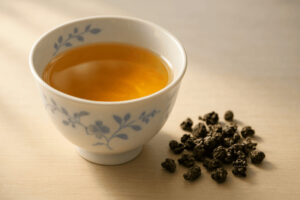
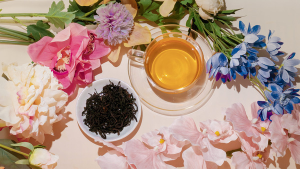
Mi Lan Xiang produces a clear, golden to deep amber liquor with an unmistakable aroma of wildflower honey and fresh orchid. The flavor profile is sweet, fruity, and floral — with secondary notes of lychee, tropical fruit, and a subtle mineral edge that comes from the mountain terroir. The finish is clean and lingering, with a characteristic sweetness that tea drinkers describe as “Shan Yun” (山韵) or “Mountain Rhyme” — a term used specifically for Phoenix Dancong to describe the lingering, mineral-sweetness characteristic of high-altitude teas.
The Science Behind the Aroma
The extraordinary fragrance of Mi Lan Xiang is not artificial — it is the result of a precise combination of naturally occurring volatile compounds. A 2020 study published in PLOS ONE analyzing Fenghuang Dancong teas using gas chromatography-mass spectrometry (GC-MS) identified a total of 122 volatile aroma compounds across Dancong types. Research from Trevivre’s sourcing documentation confirms that Mi Lan Xiang tea leaves contain over 50 identifiable aroma components, including linalool and its oxides, geraniol, phytol, and farnesol — compounds also found in fine perfumery.
Linalool produces a sweet floral scent; geraniol contributes rose-like notes; linalool oxides create fruity and floral nuances. The specific combination and ratio of these compounds in Mi Lan Xiang creates the characteristic “Nong Mi You Lan” (浓蜜幽兰) — literally “dense honey, subtle orchid” — aroma that defines the variety. This aroma profile develops during processing: the withering, solar oxidation, rolling, and repeated roasting steps transform leaf precursors into these aromatic compounds. The result is a tea that has earned the description in Chinese tea culture of being “drinkable perfume” (可以喝的香水).
Flavor Across Steepings
A high-quality Mi Lan Xiang reveals different character across multiple infusions:
- 1st–2nd steep: Intense orchid fragrance, sweet honey opening, light roasty note from processing
- 3rd–5th steep: Fruit notes emerge — lychee, peach, sometimes tropical mango or melon
- 6th–8th steep: Deeper minerality, mellow sweetness, wood and earth undertones
- 9th–10th steep: Subtle, long-lasting sweetness with clean mineral finish
How to Brew Mi Lan Xiang: A Step-by-Step Guide
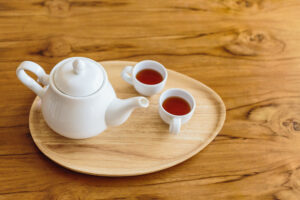
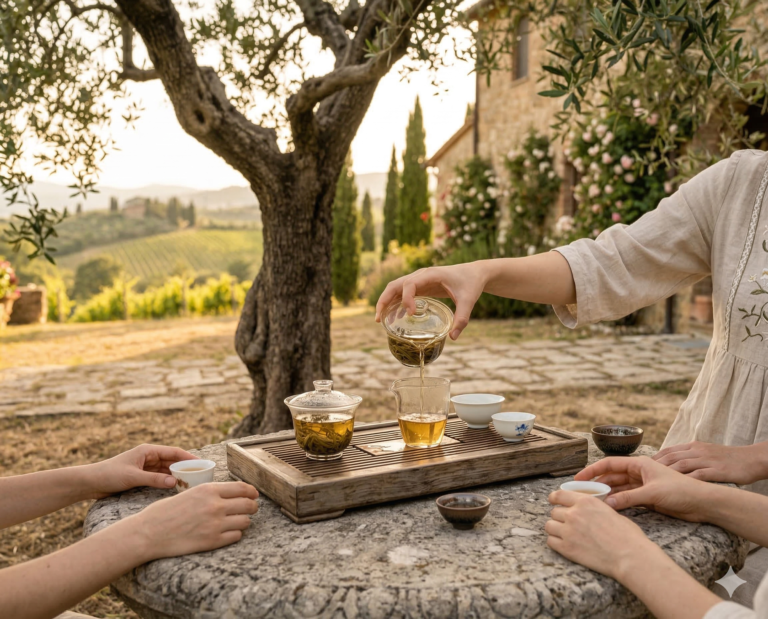
Mi Lan Xiang is best brewed using the Gongfu (功夫茶) method — the traditional Chaozhou tea ceremony approach using a small gaiwan or teapot with short, rapid infusions. This method is specifically designed to reveal the tea’s evolving aromatic layers across multiple steepings, which Western-style single long infusions cannot achieve.
Method 1: Gongfu (Recommended)
| Parameter | Recommendation |
| Vessel | Gaiwan (110ml) or small Yixing teapot |
| Water temperature | 100°C / 212°F (full boil) |
| Leaf quantity | 7–8g per 110ml vessel |
| First rinse | 5 seconds — discard; awakens the leaves |
| Steep times | 10s → 15s → 15s → 25s → 30s → 45s → 90s (add 20–30s each additional) |
| Number of steeps | 8–10 steeps from premium Wudong-origin leaves |
| Water quality | Filtered or spring water; hard tap water masks delicate aromatics |
After the final steep, try the “Gua Xiang” technique: leave the empty gaiwan lid or aroma cup to cool, then smell the inside. The lingering bottom-of-cup fragrance reveals the tea’s truest aromatic signature — and in a quality Mi Lan Xiang, this honeyed orchid scent can linger for 30 minutes or longer.
Method 2: Western Style (Simpler Entry Point)
For a simpler approach, use 2.5g of leaf per 250ml water at 90–95°C, steep for 3 minutes, and re-steep 2–3 times. This method produces a more rounded, less complex cup but remains a good introduction to the tea’s honey-orchid character. If the brew tastes astringent, lower the temperature to 90°C or reduce steep time to 2 minutes.
What Makes Azenbor’s Mi Lan Xiang Different?
Not all Mi Lan Xiang is equal. The commercial market contains a wide range of quality levels — from low-elevation Raoping-grown teas with mass-market flavor profiles, to rare single-tree Wudong-origin teas with exceptional aromatic depth. The key quality factors are tree age, growing elevation, harvest timing, and master craftsmanship during processing.
Direct-Source, Single-Origin
Azenbor sources its Mi Lan Xiang exclusively from Phoenix Mountain’s Wudong area — the highest-elevation and most historically significant growing zone for this cultivar. Teas from Wudong are harvested once annually in spring (early April), picked only during a short optimal window, and processed by experienced tea masters who adjust oxidation and roasting levels based on that season’s leaf character. This is in contrast to lower-elevation commercial production, which may harvest 2–3 times per year and prioritize yield over quality.
Hand-Roasted in Small Batches
The roasting stage is where Mi Lan Xiang’s honey and orchid aromas are coaxed out of the leaf. Azenbor’s Mi Lan Xiang undergoes multiple roasting rounds — each roast builds aromatic depth while maintaining the natural floral top notes. This “Nong Xiang” (浓香, deep fragrance) processing style, where oxidation reaches at least 30% before repeat roasts, produces the signature sweet, mellow character that distinguishes premium Mi Lan Xiang from lighter, grassier versions. Red Blossom Tea Company, a leading Phoenix oolong importer, confirms that this roasting approach is what “brings forth the honey-like aroma and flavor” that defines the varietal.
Aroma Cup Experience
When brewing Azenbor’s Mi Lan Xiang, we recommend pairing a gaiwan with a traditional aroma cup (闻香杯). Pour the brewed tea from the aroma cup into a drinking cup, then immediately smell the inside of the still-warm aroma cup — this single act captures the concentrated orchid-honey fragrance that is the signature of a premium Mi Lan Xiang. Tea connoisseurs describe this aroma as the purest expression of what Dancong tea is: a completely natural, hand-crafted scent unlike anything else in the tea world.
Mi Lan Xiang and Health: What the Evidence Shows
Phoenix Dancong oolongs, including Mi Lan Xiang, share the health properties of the broader oolong tea category, enhanced by the unique biochemistry of high-altitude, old-tree cultivation. Because Phoenix Mountain trees grow in rocky, mineral-rich soil, their roots — extending over 4–5 meters — absorb elevated concentrations of trace minerals, converting them into tea polyphenols, theanine, and alkaloids that appear in the brewed cup.
Polyphenols and Antioxidants
Oolong tea polyphenols belong to a class of antioxidants called catechins and theaflavins. The partial oxidation process (30–60% for most oolongs) creates a polyphenol profile that is distinct from both green tea (unoxidized) and black tea (fully oxidized). According to a 2023 study published in the journal Foods (Wang et al., 2023), Guangdong oolong teas including Phoenix Dancong contain a characteristic metabolomic profile with high concentrations of EGCG derivatives and specific flavonoid compounds linked to antioxidant activity.
L-Theanine and Calm Alertness
Mi Lan Xiang, like other high-altitude Phoenix oolongs, contains measurable concentrations of L-theanine — an amino acid found almost exclusively in tea that promotes a state of relaxed alertness without the jitteriness of caffeine alone. Phoenix Mountain’s high elevation, dense fog, and diffuse light conditions create a slow-growth environment that increases L-theanine accumulation in the leaves. Old-tree (Lao Cong) specimens grown at higher altitudes tend to produce leaves with elevated L-theanine content relative to younger, lower-elevation trees.
Caffeine Content
Mi Lan Xiang contains moderate caffeine — typically 30–50mg per 8oz serving when brewed Gongfu style, compared to 80–100mg in a typical cup of coffee. The caffeine-to-theanine ratio in premium Phoenix Dancong is considered particularly favorable for sustained mental clarity without the afternoon crash associated with coffee consumption. For those sensitive to caffeine, shorter infusion times (under 15 seconds in Gongfu method) significantly reduce the caffeine extracted per steep.
Mi Lan Xiang vs. Other Popular Oolongs: Quick Comparison
| Feature | Mi Lan Xiang | Tie Guan Yin | Da Hong Pao | High-Mt. Taiwan |
| Origin | Wudong Mtn, Guangdong | Anxi, Fujian | Wuyi, Fujian | Alishan, Taiwan |
| Oxidation | 30–60% | 15–30% | 50–70% | 20–45% |
| Aroma Profile | Honey + Orchid + Lychee | Floral + Creamy + Vegetal | Roasted + Mineral + Dark Fruit | Creamy + Floral + Butter |
| Steeps | 8–10 (Gongfu) | 5–7 | 6–8 | 5–8 |
| Best For | Fragrance explorers, gifting, daily drinkers | Green tea lovers exploring oolong | Dark / roasted tea fans | Creamy texture seekers |
Conclusion: Why Mi Lan Xiang Is the Perfect Introduction to Phoenix Oolong
Mi Lan Xiang stands apart in the world of oolong tea for a simple reason: it delivers the most accessible yet genuinely complex aromatic experience in the Phoenix Dancong family. Its honey-orchid fragrance profile — backed by over 50 scientifically identified aromatic compounds — requires no expertise to appreciate, yet reveals deeper complexity the more carefully you brew it. That combination of immediate appeal and long-term depth is why Mi Lan Xiang has become the world’s most popular Phoenix Dancong, and the natural starting point for anyone exploring this remarkable tea category.
The North American premium oolong market is growing at a CAGR of 12.3% (Data Bridge Market Research, 2024), driven by millennials and health-conscious consumers who are actively seeking authentic, single-origin alternatives to mass-market teas. Mi Lan Xiang — with its single-bush cultivation philosophy, documented health properties, and extraordinary sensory profile — is precisely the category of tea that meets this demand. Azenbor’s direct-source approach from Phoenix Mountain’s Wudong growing area ensures that each bag delivers the genuine article: tea grown in the right soil, at the right elevation, processed with the care that this remarkable variety deserves.
Ready to experience Mi Lan Xiang for yourself? Azenbor’s Mi Lan Xiang (Honey Orchid) is available individually or as part of the Phoenix Dancong 10 Fragrance Sampler — the perfect way to discover how Mi Lan Xiang compares to the full spectrum of Phoenix oolong aromatics.
Frequently Asked Questions
Q1: What does Mi Lan Xiang taste like?
Mi Lan Xiang tastes primarily of natural honey sweetness combined with fresh orchid and lychee fruit. The flavor profile is more floral and sweet than most oolongs, with a clean, mineral-edged finish called “Shan Yun” (mountain rhyme). Unlike green tea (which is grassy and fresh) or black tea (which is malty and bold), Mi Lan Xiang occupies a uniquely fragrant middle ground. Scientific analysis confirms the presence of over 50 aromatic compounds, including linalool and geraniol, which create this distinctive natural scent without any added flavoring.
Q2: How many times can you steep Mi Lan Xiang?
A premium Wudong-origin Mi Lan Xiang can be steeped 8–10 times using the Gongfu brewing method (110ml gaiwan, 7–8g leaf, boiling water, starting at 10-second infusions). Each steeping reveals different flavor layers: the first infusions are most aromatic with dominant orchid-honey notes, while later steeps reveal deeper fruit and mineral character. Lower-grade Mi Lan Xiang typically exhausts its flavor within 4–5 steeps, making tree age and origin a key indicator of value.
Q3: Is Mi Lan Xiang the same as honey orchid oolong?
Yes — “Honey Orchid Oolong” is the English translation of Mi Lan Xiang (蜜兰香), and the two names refer to the same tea variety from Phoenix Mountain. However, the term “honey orchid” can sometimes be used loosely by tea sellers to describe oolong teas with honey and floral notes that are not actually Phoenix Dancong. Authentic Mi Lan Xiang must come from the Fenghuang Mountain region of Chaozhou, Guangdong — teas from other origins cannot carry the true Mi Lan Xiang designation.
Q4: What is the difference between Mi Lan Xiang and Lao Cong Mi Lan Xiang?
Lao Cong (老枞) means “old bush” — Lao Cong Mi Lan Xiang is made from tea trees that are typically 50 years old or older. As trees age, their root systems deepen (often exceeding 4–5 meters), allowing them to absorb more complex minerals from Phoenix Mountain’s rocky terrain. The result is a more layered, mineral-rich cup with a smoother, more persistent sweetness and a more complex Shan Yun character. Lao Cong versions are rarer, more expensive, and generally considered the highest-quality expression of Mi Lan Xiang.
Q5: Is Mi Lan Xiang good for health?
Mi Lan Xiang, like other Phoenix Dancong oolongs, contains tea polyphenols (including EGCG-type catechins), L-theanine, and trace minerals derived from Phoenix Mountain’s mineral-rich rocky soil. These compounds are associated with antioxidant activity, improved mental alertness, and digestive support in the broader scientific literature on oolong tea. The moderate caffeine content (approximately 30–50mg per serving Gongfu-brewed) combined with L-theanine creates a state of calm focus without the jitteriness of coffee. While Mi Lan Xiang should not be considered a medical treatment, it contributes meaningfully to a health-conscious beverage routine.
Q6: How should I store Mi Lan Xiang?
Store Mi Lan Xiang in an airtight, opaque container away from light, moisture, heat, and strong odors. The optimal storage temperature is 10–20°C. Properly stored Mi Lan Xiang maintains its aromatic freshness for 12–18 months; some roasted versions can improve with careful aging for 1–2 years. Never store oolong tea in the refrigerator alongside food — it readily absorbs surrounding odors, which will mask its delicate natural fragrance.
References
- Straits Research. (2025). Oolong Tea Market Size, Share & Trends Analysis Report, 2025–2033.
- Data Bridge Market Research. (2024). Oolong Tea Market — Global Market Size, Share, and Trends Analysis Report.
- Zhou et al. (2020). Identification and similarity analysis of aroma substances in main types of Fenghuang Dancong tea. PLOS ONE, 15(12).
- Wang Q. et al. (2023). Characterization of the Aroma Profiles of Guangdong Black Teas Using Non-Targeted Metabolomics. Foods, 12(7), 1560.
- Teavivre Research Documentation. Mi Lan Xiang Phoenix Dan Cong: Origin and Aroma Chemistry. (Retrieved March 2026.)
- Red Blossom Tea Company. Mi Lan Xiang (Honey Orchid) Product Documentation. (Retrieved March 2026.)
- Trident Booksellers & Cafe. Lao Cong Mi Lan Xiang: Historical Background and Aroma Analysis. (Retrieved March 2026.)
- Siam Tea Shop. (2025). Mi Lan Xiang (Honey Orchid) Phoenix Dancong Oolong Tea: Complete Guide.