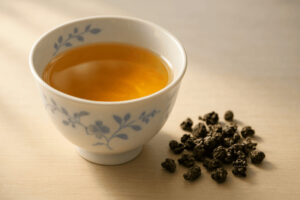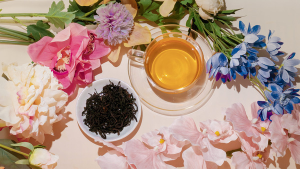

Tea for present moment awareness works because it demands something most beverages don’t: your attention. Not your half-attention. Not the kind you give something while checking your phone. The kind that has nowhere else to be.
This isn’t a metaphor. The act of brewing Phoenix Dancong oolong — warming the vessel, measuring the leaf, controlling the water temperature, watching the first infusion unfurl — is a four-minute sequence that cannot be done on autopilot. You are either present or you burn the leaves. That constraint is the practice.
This guide covers why tea is one of the most effective anchors for present-moment awareness, how Phoenix Dancong specifically trains the attention, and how to build a daily ritual that holds even on the days when stillness feels furthest away.
Key Takeaways
– Tea for present moment awareness works because brewing requires active sensory engagement — it cannot be done mindlessly
– Phoenix Dancong oolong is the practitioner’s choice: its natural fragrance system (Honey Orchid, Magnolia, Cinnamon) gives the senses a specific object to attend to, which is the basis of formal mindfulness training
– L-theanine in oolong increases alpha brain waves — the same waves associated with meditative states — before you’ve taken a sip
– A 4-minute Phoenix Dancong ritual has measurable cortisol-lowering effects independent of the tea’s biochemistry
– Consistency matters more than duration: one intentional cup daily outperforms occasional longer sessions
What Present Moment Awareness Actually Requires
Present moment awareness is not relaxation. It is attention — specifically, attention anchored to what is happening right now, through the senses, without the commentary of past regret or future worry running in the background.
Formal mindfulness traditions use an object of attention to train this: the breath, a candle flame, the sensation of feet on the ground. The object doesn’t matter as much as the act of returning to it. Every time the mind wanders and you notice and come back, that noticing is the practice. That returning is the repetition that builds the capacity.
Tea works as an object of attention for a specific reason: it changes. A candle flame looks roughly the same from minute to minute. A cup of Phoenix Dancong oolong is different in the first steep, the second, and the fifth. The fragrance shifts. The color deepens or lightens. The finish lengthens. If you’re not paying attention, you miss it. And unlike a meditation cushion, there is no social signal in carrying a cup of tea — no performance of spirituality. It’s just tea. Which is why it works for people who resist more formal practices.
The Biochemistry of Presence
Before the ritual even begins, something is already happening.
Phoenix Dancong oolong contains L-theanine, an amino acid found almost exclusively in the Camellia sinensis plant. L-theanine crosses the blood-brain barrier and directly increases alpha brain wave activity — the frequency associated with relaxed, alert focus. The same state measured in experienced meditators during practice. The same state that feels, subjectively, like being genuinely here.
A 2011 study in Brain Topography found that L-theanine produced significant increases in alpha brain wave power within 40 minutes of ingestion, particularly in individuals who described themselves as chronically anxious or prone to rumination. The effect was most pronounced in the frontal cortex — the region involved in executive attention and self-regulation.
This means that a cup of Phoenix Dancong oolong is not a metaphor for presence. It is a biochemical nudge toward it. The ritual gets you there faster. The tea holds you there longer.
The cortisol piece matters too. Cortisol — the primary stress hormone — is the neurochemical signature of not being present. When cortisol is elevated, the mind runs threat-detection loops: what did that person mean, what is going to happen, what did I forget. L-theanine moderates the cortisol response, not by sedating the system but by interrupting the feedback loop. You can think clearly. The thoughts just don’t carry you away as easily.
Why Phoenix Dancong Is the Practitioner’s Tea
Not all tea creates the same conditions for presence. A tea bag steeped for three minutes in a mug while you scroll a feed is technically tea. It is not a practice.
What makes Phoenix Dancong oolong distinct is the fragrance system — and what the fragrance system demands of the drinker.
Each Phoenix Dancong varietal is named for the natural aroma it carries: 蜜兰香 (Mi Lan Xiang, Honey Orchid), 玉兰香 (Yu Lan Xiang, Magnolia), 肉桂香 (Rou Gui Xiang, Cinnamon), 夜来香 (Ye Lai Xiang, Night Blooming). These are not flavor additives. They are the tea’s own chemistry — compounds produced by the specific cultivar, the altitude, the time of harvest, the way the leaf was processed by hand on Phoenix Mountain in Guangdong province.
To notice these aromas, you have to stop. You have to bring the cup close. You have to breathe before you drink. This is the instruction that formal mindfulness teachers give in a different form: before you eat, pause and smell. Before you drink, pause and look. Sensory engagement before consumption is a presence practice. Phoenix Dancong makes it unavoidable.
Sophia, a yoga instructor in Vancouver, discovered Phoenix Dancong three years ago when a student brought a tin of Honey Orchid Mi Lan to class. “I’d been teaching breathing practices for eight years,” she said, “and the first time I brewed that tea properly — slow, with attention — I realized it was the same thing I’d been teaching. You can’t rush it. The tea won’t let you.” She now opens every class with a shared cup rather than a guided meditation. Attendance is up.
The Four-Minute Ritual
This is not a ceremony that requires special equipment or years of practice. It is four minutes. The same four minutes you might otherwise spend looking at your phone between tasks.
What you need:
- 5-6g Phoenix Dancong oolong (roughly one heaped teaspoon per 100ml)
- Water at 90-95°C (just below a rolling boil)
- A small vessel: a gaiwan, a clay teapot, or a glass pitcher
- A cup you hold with both hands
The sequence:
Minute one. Boil the water. While it heats, open the tin and smell the dry leaf. This is not optional. The dry leaf of Honey Orchid Mi Lan carries the full fragrance before water touches it — warm, slightly honeyed, with a woody base note. Notice what the smell does to your breathing. Most people take a slower, deeper breath without intending to.
Minute two. Pour a small amount of hot water into the vessel and the cup to warm them. Pour it out. This is called wetting the vessel — it ensures the temperature stays stable for the first steep. Add the dry leaf. Smell again. The heat has activated something different now.
Minute three. Pour the water over the leaf at a low angle, not a direct splash. Watch the leaf unfurl. The first steep for Phoenix Dancong is short — 20 to 30 seconds. This is your first infusion.
Minute four. Pour into your cup. Hold it with both hands. Before you drink, look at the color. Smell the steam. Take one breath. Drink.
That’s it. Four minutes. What changes is not the ritual — it’s what you bring to it. Over days and weeks of repetition, the sequence itself becomes an anchor. Your nervous system begins to recognize the smell of dry leaf as a signal to slow down. The body learns the shape of presence before the mind catches up.
Building Consistency: The One-Cup Commitment
The most common failure in mindfulness practice is scale. People try to meditate for 20 minutes and quit after three days. They try to sit in silence and find silence intolerable. They add more structure than the practice can hold.
The tea practice requires one cup. One intentional cup, brewed with attention, without a screen in hand.
James, a product manager in London who described himself as “pathologically unable to sit still,” started the one-cup practice on the recommendation of a colleague. “I was skeptical,” he said. “It sounded like a very expensive way to get hot water. But I did it every morning for two weeks before I looked at email. By week three, I noticed I was making better decisions in the first hour of the day. Not because of caffeine — I’d had caffeine for years. Something about the actual pause.”
The mechanism James is describing is cognitive: a protected window of non-reactive time before the day’s demands load into working memory. Cortisol peaks in the first 30-45 minutes after waking (the cortisol awakening response). Introducing a slow, sensory ritual during this window moderates the peak and changes the baseline tone of the morning.
One cup. Every day. Before the phone. That is the practice.
For the deeper biochemistry behind what oolong tea does to cortisol and stress response, see our guide to oolong tea for stress relief.
Multiple Steeps as a Mindfulness Structure
Phoenix Dancong oolong can be steeped 5-8 times from a single measure of leaf. This is not just practical — it is structurally useful for a presence practice.
Each steep is slightly different. The first is bright and fragrant. The second deepens. The third may reveal something the first concealed — a mineral note, a longer finish, a shift in sweetness. By the fifth steep, the tea is quieter, more subdued, but often more transparent in a way that rewards attention.
This arc mirrors the experience of sitting in meditation over time. The first few sessions are vivid and full of sensation. Later sessions become subtler. You stop chasing the dramatic moments and start noticing smaller things. The practice deepens not because something new is added but because your capacity to perceive it grows.
Drinking Phoenix Dancong through multiple steeps in one sitting teaches the same thing: the quality of attention determines what you find, not the intensity of the experience.
Pairing Tea Awareness with Breathwork
For those who want to extend the practice beyond the cup, there is a simple structure that takes the tea ritual as its foundation:
Before the first steep: Three slow breaths. Inhale for four counts, hold for two, exhale for six. This activates the parasympathetic nervous system and sets the physiological context for the ritual.
During the steep: One breath cycle. Notice the sound of the water, the change in the leaf, the color of the liquid as it develops.
Before drinking: One breath. Smell the steam. Name what you notice — not in words necessarily, but with attention. This is what mindfulness teachers call “bare attention”: noticing without immediately categorizing.
Between steeps: Return to whatever you need to return to. Then come back for the next cup.
This structure is compatible with any other practice you maintain. It does not replace meditation. It makes the space between sessions practical. The tea is the thread that holds the awareness across the day.
For a deeper exploration of how oolong tea’s L-theanine specifically supports meditative states and cognitive clarity, see oolong tea L-theanine benefits and our overview of oolong tea health benefits.
Choosing Your Phoenix Dancong Varietal for This Practice
Not all Phoenix Dancong varietals create the same conditions for presence. The fragrance family you choose changes the quality of attention the tea invites.
Honey Orchid Mi Lan (蜜兰香): The most accessible entry point. Warm sweetness, honeyed floral notes, a long, unhurried finish. For mornings, for beginning practitioners, for people who find stillness difficult. The fragrance is approachable rather than challenging.
Magnolia Yu Lan (玉兰香): Quieter, more refined. Fresh florals with a clean, long-lasting sweetness. For practitioners who want less stimulation and more spaciousness. This is the varietal for the middle of a workday, for returning to presence after disruption.
Night Blooming Ye Lai Xiang (夜来香): Nocturnal florals, a slight peach undertone, warm and intimate. For evening practice, for unwinding, for the transition between the demands of the day and the quiet of the night. This varietal was traditionally picked after dusk, when the flowers it’s named after open. One sip, and you understand why they waited.
Cinnamon Rou Gui (肉桂香): Bold, spiced warmth, confident and grounding. For days when the mind is scattered rather than stressed — when you need anchoring rather than softening. The intensity of the fragrance demands attention in a way the lighter varietals don’t.
Begin with Honey Orchid if you’re new to the practice. Return to others as your familiarity with the tea deepens.
Explore the full range with the Phoenix Oolong Sampler, which includes multiple varietals specifically suited for this kind of intentional daily practice. Or begin directly with Honey Orchid Mi Lan Dancong — the varietal most practitioners return to regardless of how far they explore.
Frequently Asked Questions
Can tea really help with present moment awareness? Yes — through two distinct mechanisms. First, the brewing ritual requires active sensory engagement that cannot be done on autopilot, making it a natural anchor for attention. Second, the L-theanine in Phoenix Dancong oolong increases alpha brain wave activity, the neurological signature of relaxed, present-moment awareness. Both effects are active from the moment you open the tin.
What type of tea is best for mindfulness practice? Phoenix Dancong oolong is the most effective for mindfulness practice because its natural fragrance system — each varietal named for a specific aroma — gives the senses a specific, evolving object of attention. This is precisely the structure that formal mindfulness training uses. The tea changes across multiple steeps, which rewards sustained attention rather than initial novelty.
How long does the tea ritual need to be to have an effect? Four minutes is sufficient for measurable cortisol moderation and a meaningful shift in attentional state. The research on L-theanine shows alpha brain wave increases within 40 minutes of ingestion, but the ritual effect — the parasympathetic activation from slow, sensory-focused activity — begins immediately. Consistency matters more than duration.
Is tea for present moment awareness the same as a tea ceremony? No. A formal tea ceremony (Gongfu Cha, Chanoyu) is a structured practice with specific cultural forms and social context. Tea for present moment awareness is a personal, daily practice that borrows from these traditions but requires no special training, no ceremony, and no audience. The only requirement is attention.
Can I use any oolong for this practice? You can use any tea you brew with intention. Phoenix Dancong oolong is recommended specifically because its natural fragrance system — multiple distinct aromas that change across steeps — gives the practice more to work with. A flat-tasting tea brewed quickly in a mug offers less sensory depth and therefore less material for the attention to engage with.
The Practice You Can Actually Keep
Most wellness practices fail not because they are ineffective but because they ask too much of a tired person. The tea practice asks for four minutes and one cup.
What it gives back is a daily point of return. A moment that is yours, that does not require you to perform or produce or decide. A cup held with both hands. A fragrance that opens before you are ready. A few sips of something that has been made with attention by someone who grew it with care on a mountain you may never visit.
That is enough. That is, in fact, quite a lot.
Begin where you are. One cup. Tomorrow, and the day after.