
In a world increasingly conscious of its environmental footprint, a simple cup of tea is no longer just a personal pleasure—it’s a connection to the land it came from. As consumers, we seek out terms like “eco-friendly,” “sustainable,” and “organic,” but what do these truly mean in the context of a tea garden? The serene image of green, misty mountains can sometimes mask agricultural practices that are far from harmonious with nature.
This guide is designed to help you decode what makes a tea genuinely eco-friendly. We will explore the critical differences between industrial and sustainable tea farming, outline the core principles that define a truly “green” cup, and show you what to look for when making a choice. Using the ancient tea gardens of the Fenghuang Mountains as our model, we’ll demonstrate how the most environmentally sound practices often produce the most delicious and complex teas.
Why ‘Eco-Friendly’ Matters: The Problem with Conventional Tea Farming
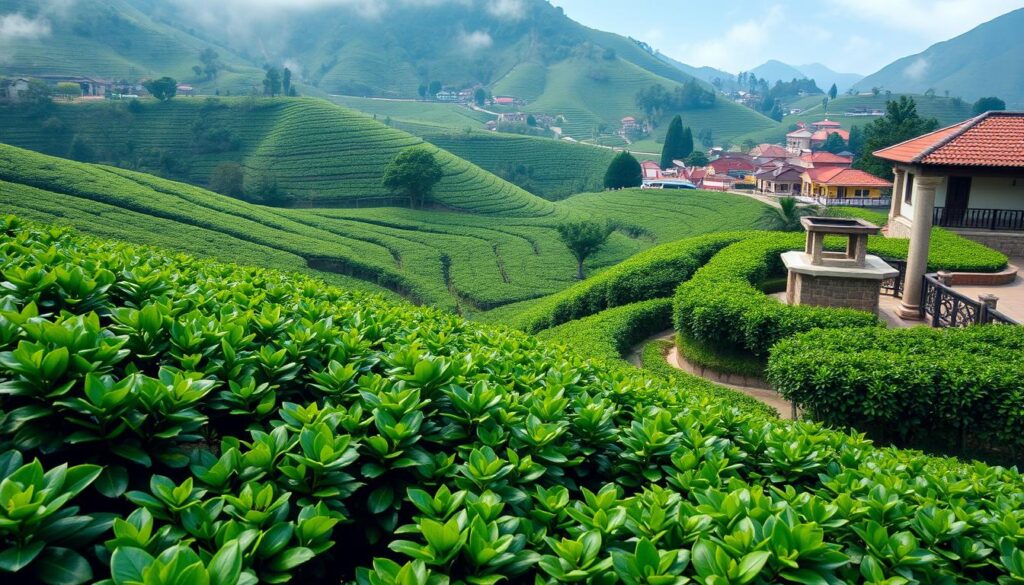
To appreciate the solution, we must first understand the problem. Much of the mass-market tea available today comes from industrial-scale monocultures—vast fields growing a single, genetically identical tea plant. While efficient for high-yield production, this model creates a fragile system with significant ecological consequences.
- Soil Degradation: Growing only one crop depletes specific nutrients, leading to soil exhaustion and a heavy reliance on synthetic fertilisers.
- Pest and Disease Pressure: A field of identical plants is a paradise for pests, necessitating the widespread use of chemical pesticides and fungicides to prevent crop loss.
- Loss of Biodiversity: These “green deserts” eliminate habitats for native plants, beneficial insects, and wildlife, disrupting the local ecosystem.
An “eco-friendly tea” is one that is grown in a way that actively works to solve these problems, creating a healthier planet and, as we’ll see, a better-tasting tea.
What Makes Tea Eco-Friendly? The Core Principles
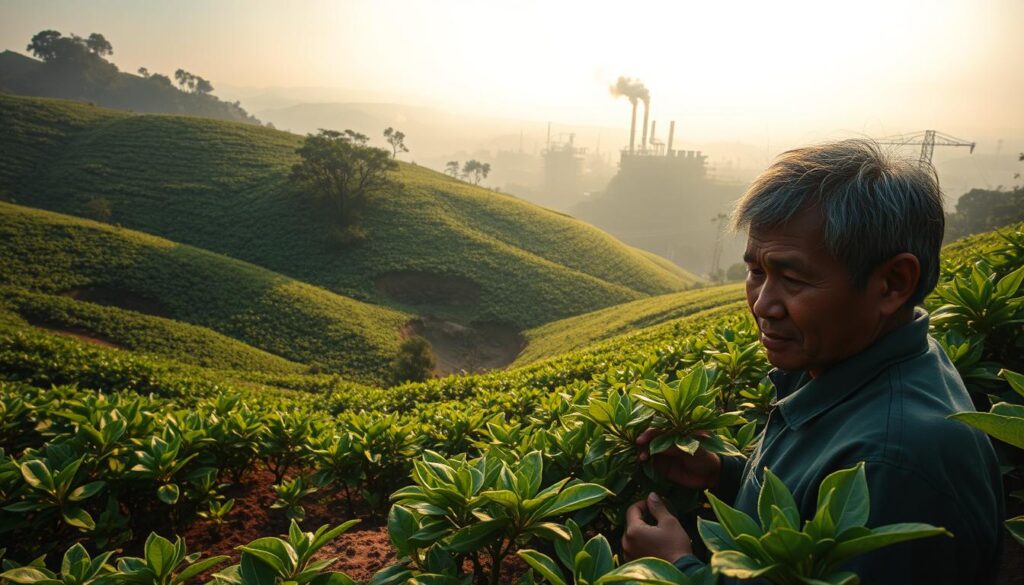
Genuinely eco-friendly tea farming is a holistic system built on several key pillars. When you’re looking for a sustainable choice, these are the principles at work behind the scenes.
1. Thriving Biodiversity (Beyond Monoculture)
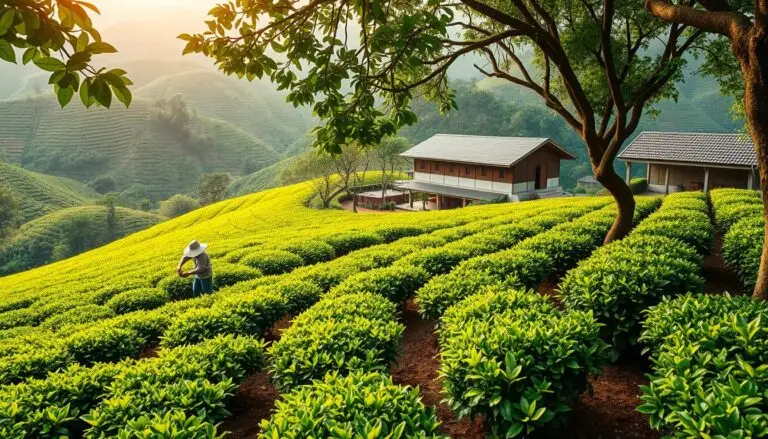
The foundation of an eco-friendly tea garden is diversity. Instead of a sterile field, imagine a thriving ecosystem where tea bushes grow alongside native trees, fruit orchards, and wildflowers. This polyculture approach creates a resilient, self-regulating environment. The varied plants provide habitats for predator insects that naturally control pest populations, drastically reducing the need for chemical pesticides. This is a farm that works with nature, not against it.
2. Living Soil (Organic & Regenerative Practices)
The soul of a tea’s flavour—its terroir—comes from the soil. Eco-friendly farming focuses on feeding the soil, not just the plant. Farmers use organic compost, manure, and mulch to build a rich, living soil teeming with beneficial microbes and earthworms. This “living soil” is better at retaining water, preventing erosion, and providing a balanced diet of minerals to the tea plant. This natural process builds a deeper, more complex flavour in your cup, a taste that synthetic fertilisers simply cannot replicate.
3. Water Stewardship (Protecting a Precious Resource)
Eco-friendly tea farms are mindful of their water usage. Many of the best high-altitude oolong gardens are naturally irrigated by mountain mists and rainfall, requiring little to no extra watering. Furthermore, maintaining the surrounding forest ecosystem is crucial. This forest acts as a natural sponge, regulating water flow, purifying it, and preventing topsoil from eroding into local streams. This protects the entire watershed, benefiting both the farm and the wider community.
Case Study: How Phoenix Dancong Embodies Eco-Friendly Principles
To see what these principles look like in the real world, we can look to the tea gardens of the Fenghuang (Phoenix) Mountains, home of the famed Phoenix Dancong oolong. These gardens are a living model of sustainability.
Generational Wisdom: The craft of making Dancong is a form of cultural heritage, passed down through families. This includes a deep, intuitive knowledge of the land—knowing how to care for ancient tea trees and how to maintain the ecological balance of the garden. This human element ensures that the farming is not just a set of techniques, but a culture of long-term stewardship.
A Genetic Library, Not a Monoculture: The very concept of “Dancong” (“single grove”) is anti-monoculture. The mountains are a mosaic of hundreds of distinct tea cultivars, each with its own unique aroma, from the sweet Mi Lan Xiang (Honey Orchid Aroma) to the spicy Jiang Hua Xiang (Ginger Flower Aroma). This inherent biodiversity creates a naturally resilient ecosystem.
Terroir-Driven, Low-Intervention Farming: Fenghuang farmers know the magic of their tea is in the unique, mineral-rich volcanic soil. Their philosophy is one of minimal intervention. They don’t use harsh chemicals because it would mask the very minerality and complex aromas that make their tea valuable. The goal is to let the tea express the pure character of its pristine environment.
How to Choose and Support Genuinely Eco-Friendly Tea
As a consumer, your choices are powerful. Here’s what to look for to ensure the tea in your cup is as good for the planet as it is for your palate.
- Look for Transparency and Traceability: An eco-friendly tea often comes with a story. Look for producers who can tell you the specific region, mountain, and even the farming philosophy behind their tea. This accountability is a key indicator of conscientious sourcing.
- Prioritise Quality and Craft: Often, the most sustainably produced teas are made by artisans on a small scale. Investing in a higher-quality, single-origin tea supports these farmers who act as guardians of their local ecosystems. The superior flavour is a direct result of the healthy environment they cultivate.
- Understand the True Cost: A tea produced with chemical inputs on a massive scale will always be cheaper. The price of a genuinely eco-friendly tea reflects the true cost of responsible land management, biodiversity preservation, and the skilled labour required to work in harmony with nature.
Ultimately, “eco-friendly” is more than just a label; it’s a reflection of an entire ecosystem. The flavour, aroma, and energy you experience in a cup of sustainably grown tea are the final expression of healthy soil, clean water, and a thriving, diverse environment. By making a conscious choice, you are not only getting a better-tasting tea—you are casting a vote for a healthier, more sustainable world.p of oolong tea we enjoy is more than just a beverage; it is the final expression of an entire ecosystem, a direct reflection of the health of the soil, the purity of the water, and the biodiversity of the garden it came from. By choosing to support these sustainable models, we not only secure a future for better tea, but for a better world.
FAQ
What is the environmental impact of tea farming?
Tea farming can harm the environment in many ways. It can lead to deforestation, loss of habitats, and soil erosion. It also causes water pollution and the overuse of chemicals. But, there are steps being taken to make tea farming more sustainable, like in Oolong tea production.
How does Oolong tea production differ from other teas?
Oolong tea is special because of how it’s made. The leaves are partially oxidized, giving it a unique taste. This method needs specific techniques and can affect the environment differently than other teas.
What are the main environmental challenges in tea cultivation?
Tea farming faces big environmental challenges. These include cutting down forests for plantations and losing habitats for animals and plants. Soil erosion and water pollution from farming are also big problems.
How does water usage impact tea farming?
Tea plants need a lot of water, which can be a problem in dry areas. Water pollution from farming is also a big worry. Finding ways to use water wisely is key to solving these issues.
What is the impact of agricultural chemicals in tea farming?
Chemicals like pesticides and fertilizers can harm the soil, water, and wildlife. They can also affect the health of tea workers and those who drink the tea. Organic and biodynamic farming are being used as safer alternatives.
What are some eco-friendly tea production methods?
Eco-friendly tea farming includes organic and biodynamic methods. It also involves planting trees in tea fields and using renewable energy. These practices help reduce harm to the environment while keeping tea quality high.
How does energy consumption in tea processing affect the environment?
Making tea, like Oolong, can use a lot of energy. This can increase carbon emissions. But, new ways to use less energy and renewable sources are being explored to lessen this impact.
What role do consumers play in promoting sustainable tea production?
Consumers are very important in making tea farming more sustainable. By choosing tea that’s made in an eco-friendly way, they help the industry move towards greener practices. This supports a better future for tea farming.