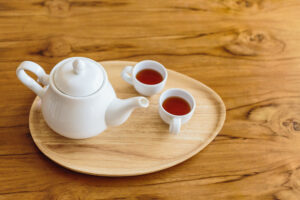

An Evening Wind-Down Tea Routine is a strategic transitional practice designed to signal the body’s circadian rhythm that the day has ended. By combining the “Warm Bath Effect” (drinking warm liquid to trigger vasodilation and lower core body temperature) with non-stimulating herbal or roasted teas (like Hojicha), this routine reduces cortisol levels, separates work from rest, and prepares the brain for deep sleep.
Introduction: The “Sunset” Your Brain Is Missing
For our ancestors, the day ended with the setting of the sun. The gradual descent into darkness was a clear, biological signal to the brain: the time for hunting and gathering is over; it is time to rest. In our modern world, we have no sunset. We are bathed in the perpetual “high noon” of blue light from screens, our minds pinged by work messages and news alerts long after dark. Our brains, missing their cue to power down, remain in a state of high alert.
To find restorative sleep, we must create an artificial sunset—a deliberate, sensory ritual that acts as a physical switch, telling our mind and body that the show is over. An evening tea routine is not about quenching thirst; it is a powerful, science-backed tool for creating that transition, guiding your nervous system from the chaos of the day into the calm of the night.
The Science of Sip & Sleep (Why It Works)
The profound sleep-promoting effect of a warm evening tea is not just a cozy feeling; it’s a cascade of clever physiological and psychological events.
The “Warm Bath Effect” (Thermoregulation)
Here is a fascinating, counter-intuitive piece of science: drinking a warm beverage before bed can actually help you cool down. A key signal for your brain to initiate sleep is a slight drop in your core body temperature. When you drink a warm liquid, it triggers vasodilation—the widening of blood vessels in your extremities. This allows heat to radiate from your body’s core to your skin, hands, and feet (which is why they feel so pleasantly warm). As this heat dissipates, your core body temperature gently falls, sending a powerful “time for sleep” message to your brain.
The Psychology of “Closure”
Our brains are powerful pattern-recognition machines. As the scientist Ivan Pavlov demonstrated, we can be conditioned to respond to cues. When you consistently perform the same ritual at the same time every night—using the same favorite mug, brewing the same comforting tea—you are creating a powerful sleep trigger. After a week or two of this routine, the simple act of smelling your chosen evening tea will be enough to signal your brain to start producing melatonin, the hormone of darkness and sleep. The ritual becomes a conditioned response for calm.
The Perfect Evening Tea Menu (Expert Selection)
To be effective, an evening tea must be low in—or free of—caffeine. Here are some choices that go beyond the standard chamomile.
Option A: The “True Tea” Lover (Extremely Low Caffeine)
- Recommendation: Hojicha (Roasted Green Tea)
- Why it’s Unique: Hojicha is made by taking Japanese green tea leaves and roasting them at a high temperature. This process doesn’t just create a beautiful flavor; it also causes the caffeine to sublimate, effectively removing most of it from the leaves.
- The Aroma of Calm: The roasting process creates a high concentration of pyrazines, the same aromatic compounds that give roasted nuts, dark chocolate, and coffee their comforting scents. The warm, nutty, caramel-like fragrance of Hojicha is deeply soothing and provides a powerful psychological sense of warmth and safety.
- Recommendation: Aged White Tea (Boiled)
- Conditions: For this purpose, choose an aged “Shou Mei” grade of white tea.
- Why it Works: Over years of slow aging, the character of white tea transforms, becoming deep, mellow, and medicinal. The caffeine’s stimulating effects mellow significantly. Gently simmering the leaves (rather than steeping) releases a high concentration of soothing flavonoids and creates a thick, smooth liquor that is exceptionally calming for the body.
Option B: The Herbal Purist (Zero Caffeine)
- Recommendation: Rooibos
- Why it Works: This South African “red bush” is naturally caffeine-free and has a smooth, slightly sweet, and earthy flavor. Crucially, it is a good source of magnesium, a mineral essential for relaxation and known to help calm the nervous system and relax tense muscles.
- Recommendation: A Blend of Lavender & Valerian Root
- A Word of Advice: Let’s be honest: Valerian root is arguably the most effective herbal sedative, but it smells like old, damp socks. Its effectiveness, however, is undeniable for many. The best way to enjoy its benefits is to blend it with a powerfully fragrant herb like lavender or even peppermint, which can mask its aroma while adding their own calming properties.
The 4-Phase Evening Wind-Down Routine
This is a structured protocol to guide you from a state of high alert to one of deep rest.
Phase 1: The Divide (T-minus 60 minutes before bed)
This is the most important step. Plug your phone in to charge—outside of your bedroom. If that’s not possible, place it on a dresser across the room, far from arm’s reach. Now, go to the kitchen and put the kettle on. The sound of the water beginning to heat up is the official starting bell for your digital detox. It is a clear signal that you are now disconnecting from the external world and beginning to connect with your internal one.
Phase 2: The Slow Brew (Sensory Engagement)
An evening wind-down is not the time for the complex, attention-demanding steps of Gongfu Cha. Instead, opt for a method of gentle surrender.
- The Method: Use either the “Grandpa Style” (simply place leaves in a large mug and let them steep gently) or “Simmering” (gently boiling Aged White Tea or Rooibos on the stove).
- The Focus: As the tea steeps or simmers, watch the leaves. See them slowly unfurl, release their color, and gradually sink to the bottom. This is a powerful visual metaphor for your own mind: you are consciously “letting the dust settle” after a long day.
Phase 3: The Sip & Reflect (Journaling)
Take your warm mug to a comfortable chair. Do not turn on Netflix. The goal is to continue winding down, not to introduce a new stream of stimulating content.
- The Action: The “Brain Dump.” For the ten minutes it takes to drink your tea, take out a piece of paper and a pen. Write down the three most important things you need to do tomorrow. Then, write down anything else that is worrying you or bouncing around in your head.
- The Science: This practice is known as “closing open loops.” By transferring your worries from your mind onto paper, you give your brain permission to stop rehearsing them. You’ve told it, “This is captured and safe; you can let go now.”
Phase 4: The Transition (Somatic Comfort)
As you finish the last sip, bring your awareness to your body. Notice the warmth in your belly. You may even feel a very slight, pleasant perspiration as the “Warm Bath Effect” kicks in and your body begins to cool its core. Take this as a physical sign of your body preparing for rest.
Your final action is to take your empty mug to the kitchen, wash it, and dry it. This simple act of closure is a powerful psychological signal that says, with finality: “The day is done.”
Mistakes That Ruin the Routine
- Mistake 1: Drinking too late. Aim to finish your tea about 45-60 minutes before you intend to sleep. This gives your body time to process the liquid and minimizes the chance that a late-night bathroom trip will interrupt your sleep cycle.
- Mistake 2: Using a generic “Green Tea” bag. Be warned: a standard green tea bag contains a significant amount of caffeine that can delay sleep onset and disrupt your deep sleep architecture, even if you manage to fall asleep.
- Mistake 3: Adding sugar or honey. While comforting, sugar can cause a spike and subsequent crash in your blood sugar levels, which can be a common cause of waking up in the middle of the night.
Conclusion: Reclaiming Your Night
An evening wind-down tea routine is not just a pleasant beverage; it is a gentle but firm boundary you draw between the chaos of the day and the sanctuary of the night. It is a promise you make to yourself that you deserve a period of quiet, a moment to unplug, and the gift of restorative rest. It is the artificial sunset you create to reclaim your night.
Tonight, leave your phone in the other room. Gently simmer a pot of Hojicha. See if you can remember what true tiredness feels like.
FAQ
- Q: Does Green Tea keep you awake?
A: Yes, most green teas contain a moderate amount of caffeine and are best enjoyed earlier in the day. The one major exception is Hojicha, a Japanese green tea that is roasted at high temperatures, which removes most of its caffeine. - Q: Is Peppermint tea good for sleep?
A: It depends. For many, peppermint is a wonderful, caffeine-free digestive aid. However, for some people, the sharp, invigorating menthol can be alerting rather than relaxing. If you’re sensitive, a gentler floral like Chamomile is a safer choice. - Q: How much water should I drink before bed?
A: To reap the benefits of the “Warm Bath Effect” without disrupting sleep, limit your evening tea to a standard mug size of about 6-8 ounces (180-240 ml). This is generally enough to signal your body without over-burdening your bladder.