
If you associate tea with steaming kettles and warming mugs, you’re only experiencing half of its potential. The question isn’t just can you steep tea in cold water, but why you should. The answer lies in a gentler, more nuanced extraction process. Cold water extracts fewer bitter compounds like tannins and catechins while preserving the delicate, volatile aroma oils that heat can diminish. This makes it the perfect method for showcasing the perfume-like notes of a truly exceptional tea, especially a Phoenix Dancong Oolong.
Introduction
Cold extraction, or cold brew tea, is the art of slow, patient infusion using cool or room-temperature water. It’s a method celebrated for its ability to produce a beverage that is remarkably sweet, incredibly smooth, and bursting with clean, vibrant flavor. This technique is perfect for anyone seeking effortless elegance: prepare it the night before for a grab-and-go morning brew, let it steep on your desk for a day of smooth sipping, or craft a stunning batch for sophisticated summer hosting.
In this definitive guide, we’ll explore the three essential methods for cold brewing: the classic Room-Temperature Cold Brew, the theatrical Ice-Cube ‘Ice Drip’, and the speedy Hot-Bloom Shock-Chill. Each method offers a unique taste profile and serves a different purpose, but all will unlock a new dimension of your favorite tea leaves. No idea where to start? The diverse profiles in our [10-Aroma Sampler Pack] make it the perfect discovery kit for finding your ideal cold brew match.
Quick Guide—Ratios, Time, and Taste
Before we dive into the details, here is a comparative overview of the three methods. Note how the technique directly influences the final taste, allowing you to tailor your brew to the occasion.
| Method | Ratio (g:ml) | Time | Expected Taste | Best Use | Difficulty |
|---|---|---|---|---|---|
| Room-Temp Cold Brew | 6–8g : 500ml | 6–10 hours | Balanced, bright, sweet, low astringency, long finish. | Daily drinking, large batches, meal pairing. | Easy |
| Ice-Cube ‘Ice Drip’ | 7–9g : 250ml | 2–4 hours | Ultra-sweet, nectar-like, intense aroma, dessert-like. | Special occasions, tasting flights, impressing guests. | Medium |
| Hot-Bloom Shock-Chill | 5–7g : 300ml | < 1 minute | Bold, full-bodied, strong top notes, still very smooth. | Instant iced tea, when you’re short on time. | Easy |
Method 1 — Room-Temperature Cold Brew (Overnight, Balanced & Bright)
This is the most common and straightforward method for making cold brew tea. It’s a set-it-and-forget-it technique that reliably produces a clean, sweet, and beautifully balanced brew.
Why it works: By avoiding heat entirely, this slow, gentle persuasion coaxes out the tea’s sweet amino acids and fragrant oils while leaving most of the bitter tannins behind in the leaf. The result is a brew with virtually zero astringency and a remarkably clear expression of the tea’s natural character.
What you’ll need:
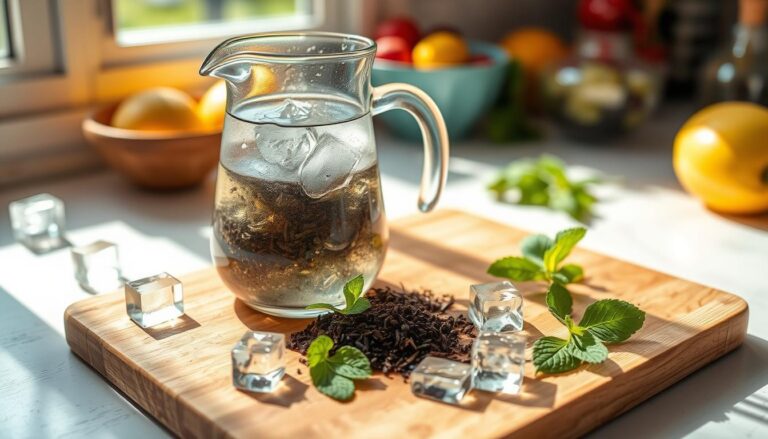
- A clean, lidded glass jar or pitcher (a Mason jar or French press works perfectly)
- A fine-mesh strainer
- Cool, filtered water
The Steps
- Measure Your Tea: Place 6 to 8 grams of tea leaves into your jar. For a Phoenix Dancong, you don’t need to rinse the leaves for a cold brew.
- Add Water: Pour 500 ml of cool, filtered water over the leaves.
- Steep Patiently: Secure the lid and let the tea steep at room temperature for 6 to 10 hours. You can also place it directly in the refrigerator, but you may need to extend the steeping time to 12-16 hours.
- Strain and Serve: Once steeped to your liking, strain the leaves from the liquor. Serve the cold brew neat or over a large ice cube.
Tasting Notes with Phoenix Dancong:
- Orchid Aroma (芝兰香, Zhī Lán): This method unlocks the most elegant side of Zhilan. The brew is exceptionally clean, with gentle, ethereal floral notes and a crystalline sweetness that lingers.
- Ginger Flower Aroma (姜花香, Jiāng Huā): The cold water enhances Jianghua’s creamy, almost milky body. The spicy top notes are softened into a beautiful, sweet ginger-floral perfume with a long, satisfying finish.
Pro Tips / Troubleshooting: If your brew is too light, extend the steeping time by an hour or two or increase your leaf-to-water ratio by 1-2 grams. If it’s too strong, simply reduce the steeping time on your next batch.
Method 2 — Ice-Cube ‘Ice Drip’ (Slow Melt, Maximum Sweetness)
This is the most theatrical and visually stunning way to make cold brew tea. It’s a method that turns tea making into a captivating event, yielding a small, concentrated elixir of pure sweetness and aroma.
Why it works: As the ice slowly melts, the super-chilled water trickles down one drop at a time, passing through the leaves. This incredibly slow, cold extraction process pulls out the absolute maximum sweetness and aromatic compounds, resulting in a tiny volume of intensely flavorful, nectar-like liquor.
What you’ll need:
- A tall glass, a Japanese shiboridashi, or a coffee dripper (like a V60)
- Large, clear ice cubes
- A fine sieve if your vessel requires it
The Steps
- Prepare the Leaves: Place 7 to 9 grams of tea leaves at the bottom of your glass or dripper, packing them loosely to allow water to pass through.
- Add Ice: Gently place a large piece of clear ice (or several large cubes) directly on top of the leaves, filling the vessel.
- Let it Melt: Allow the ice to melt naturally at room temperature. This will take anywhere from 2 to 4 hours, depending on the ambient temperature and the size of your ice.
- Collect the Elixir: The precious drops of tea will collect at the bottom. Once the ice has fully melted, your brew is ready. Serve it in small, chilled tasting glasses.
Flavor Payoff: This method produces the most intense and pure aroma of the three. The sweetness is dessert-like, rich, and syrupy. While the yield is small (often just a few ounces), the experience is unforgettable, making it perfect for a special occasion or a meditative solo tasting session.
Pro Tips: Use the largest, clearest ice cubes you can make. They melt more slowly and evenly. This method is perfect for creating tasting flights with different Dancong aromas to compare their unique profiles in their purest form.
Method 3 — Hot-Bloom, Shock-Chill (Bold Body, Ready in Minutes)
Don’t have hours to wait? This “flash chill” method gives you a robust and aromatic iced tea in under a minute, combining the best of hot and cold brewing.
Why it works: A very short infusion with hot water—the “bloom”—instantly awakens the tea leaves, releasing the full-bodied flavors and heady top-note aromatics. Immediately pouring this hot concentrate over a large volume of ice—the “shock-chill”—locks in those aromas and prevents the extraction of bitter compounds that would occur in a long, hot steep.
What you’ll need:
- A teapot or heatproof brewing vessel
- A large, sturdy glass filled to the brim with ice cubes
- A strainer
The Steps
- Measure Your Tea: Place 5 to 7 grams of tea in your brewing vessel.
- Bloom with Hot Water: Pour just enough hot water (90–95°C / 195-203°F) to cover the leaves. Let it bloom for only 20 to 40 seconds. This step is critical—any longer and you risk bitterness.
- Strain and Shock-Chill: Immediately strain the hot tea concentrate directly over your glass full of ice.
- Stir and Serve: Stir vigorously for about 10 seconds to ensure it chills rapidly and evenly. The ice will dilute the concentrate to the perfect strength.
Taste Profile: This method yields an iced tea with a noticeably thicker mouthfeel and more pronounced top notes compared to a classic cold brew. It’s bolder and more robust, yet still significantly smoother and sweeter than a hot-brewed tea that has simply been left to cool.
Pro Tips: Pre-chill your serving glass to minimize ice melt and preserve the tea’s strength. Always keep the bloom time under one minute to avoid extracting astringency.
Which Teas Shine in Cold Water? (Why Dancong Oolong Excels)
While many teas work well for cold brewing, aromatic oolongs—and specifically Phoenix Dancong—are arguably in a class of their own. Dancong’s identity is built on its incredible diversity of natural, perfume-like profiles. With nearly 100 distinct aroma types, from honeyed orchids to spicy ginger flowers, its greatest asset is its fragrance. Cold extraction is the perfect stage for this performance. The gentle process showcases these delicate aromas with stunning clarity, creating a brew that is both refreshing and deeply fragrant. Our low-bitterness craft and focus on aromatic expression make Azenbor Dancongs ideal for any cold brew method.
Our House Picks for Cold Brew:
- Orchid Aroma (芝兰香, Zhī Lán): Chosen for its unparalleled elegance and clarity. Cold brewing mutes any potential astringency and elevates its pure, clean floral sweetness.
- Ginger Flower Aroma (姜花香, Jiāng Huā): Selected for its remarkable creamy texture and huigan (returning sweetness). The cold water highlights its sweet, spicy-floral character, making it an incredibly satisfying and memorable brew.
Safety, Storage, and Serving
- Hygiene First: Always use freshly filtered water and thoroughly cleaned containers to prevent bacterial growth. Once brewed, your cold brew tea should be refrigerated.
- Storage: For the best flavor, finish your cold brew within 24 hours. It will remain safe to drink for up to 48 hours, but the delicate aromas will begin to fade.
- Serving Ideas: Elevate your cold brew experience by serving it in chilled tulip glasses to concentrate the aroma. Add a twist of citrus zest (lemon, grapefruit) to complement the floral notes. For a festive touch, mix your cold brew concentrate with sparkling water (a 1:3 ratio) for a highball-style tea spritz.
Troubleshooting & FAQs
- Why is my cold brew weak?
The most common reasons are too short a steeping time or too low a leaf-to-water ratio. For Method 1, try increasing the time by 2 hours or adding 2 grams more tea. You can also gently agitate the jar once halfway through the process. - My cold brew tastes a little bitter. What went wrong?
This is rare but can happen. If using Method 3 (Hot-Bloom), shorten your bloom time to under 30 seconds. If using Method 1, you may have steeped it for too long for that particular tea; try reducing the time. - Can I re-steep the leaves from a cold brew?
Yes. While the first infusion will be the most flavorful, you can get a second, more subtle infusion. For Method 1, simply refill the jar with water and steep for a slightly longer time. The flavors will be lighter but still pleasant. - How does the caffeine in cold brew tea feel?
Caffeine is water-soluble, so cold brew tea definitely contains caffeine. However, many people report that the energy feels “smoother” and less jarring than hot-brewed tea or coffee, likely due to the slower absorption and lack of bitter compounds. If you are sensitive, start with smaller servings.
Ready to Taste the Difference?
Exploring the world of cold brew tea is a journey into flavor, aroma, and effortless refreshment. The best way to discover your personal favorite is to experiment with different profiles.
With ten distinct aromatic profiles, it’s the ultimate toolkit for discovering which Dancong shines brightest for you in a cold brew.